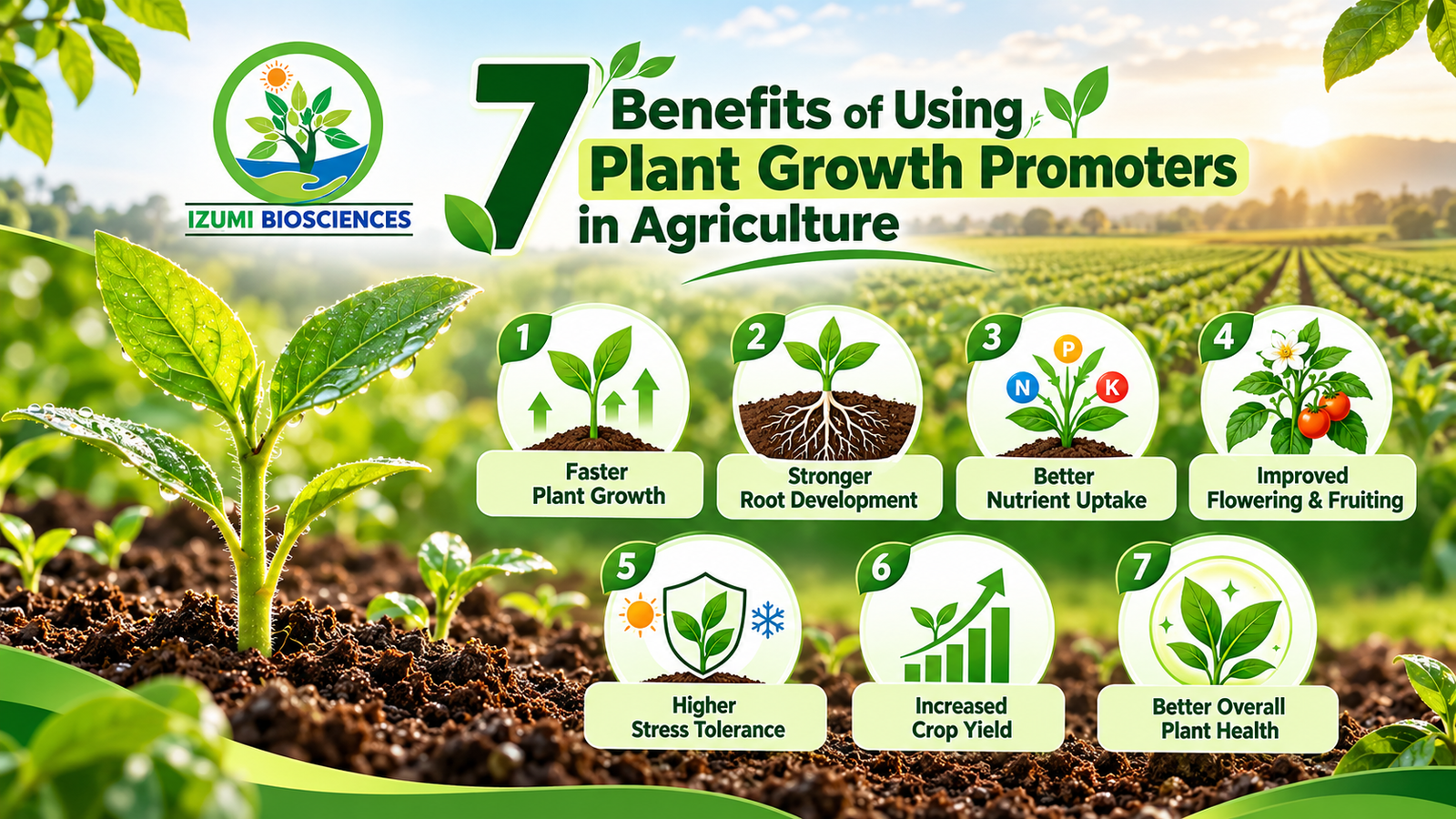
7 Benefits of Using Plant Growth Promoters in Agriculture
Most farmers have seen it happen. Two plots get the same seed, the same water, and the same fertilizer, yet one comes up stronger, greener, and more even than the other. The difference often comes down to how well the plants were supported in their early weeks and at key stages after that. This is where plant growth promoters earn their place in a crop plan.
Plant growth promoters are products that support the natural growth processes inside a plant, such as root development, nutrient uptake, flowering, and stress response. They don’t replace fertilizer or irrigation. They help the plant make better use of what it already gets. In this blog, we’ll go through seven clear benefits of using plant growth promoters in agriculture and what each one means for your fields.
What Do Plant Growth Promoters Actually Do?
A plant grows by moving water and nutrients from the soil, turning sunlight into energy, and sending that energy to roots, shoots, flowers, and fruit. Hormones and natural compounds inside the plant control how fast and how well each of these steps happens.
Plant growth promoters work with this system. Depending on the product, they may contain natural hormones, amino acids, seaweed extracts, or beneficial microbes. They can be applied as a seed treatment, a soil application, or a foliar spray. Bio-based options are especially popular now because they support the plant and the soil together, instead of pushing growth in a way that tires the crop out later.
Let’s look at what this means in practice.
1. Stronger and Deeper Root Systems
Roots decide how much water and nutrition a plant can reach. Plant growth promoters encourage the formation of more root hairs and lateral roots, which widens the area a plant can draw from.
A better root system also helps during dry spells, since deeper roots can reach moisture that shallow roots miss. For young seedlings and transplanted crops, quick root establishment can be the difference between a clean stand and patchy gaps that need replanting.
2. Better Use of Nutrients Already in the Soil
Many farmers apply good fertilizer and still see average results, because a large share of nutrients never reaches the plant. Some are locked in the soil, and some wash away with irrigation or rain.
Plant growth promoters help plants take up nutrients more efficiently, especially when roots are healthy and active. Some microbial products also help release nutrients that are otherwise hard for roots to access. The outcome is simple: you get more value from each bag of fertilizer you apply.
3. More Uniform Growth Across the Field
Uneven fields are a headache. When some plants flower early and others lag behind, spraying, irrigation, and harvesting all become harder to time well.
Plant growth promoters help plants move through growth stages at a similar pace. This evenness makes crop management simpler, and for fruit and vegetable growers it often leads to more consistent produce size and quality at harvest.
4. Improved Flowering and Fruit Set
Flowering is one of the most sensitive stages in a crop’s life. Heat, sudden rain, or nutrient gaps can cause flowers to drop before they turn into fruit, which directly cuts yield.
Applied at the right time, plant growth promoters support stronger flower formation and help hold flowers and young fruit on the plant. For crops like tomato, chilli, cotton, and many fruit trees, this single benefit can have a visible effect on the final harvest.
5. Greater Tolerance to Weather and Field Stress
Farming rarely goes to plan. A hot week, a cold night, patchy rain, or a stretch of waterlogging can all slow a crop down. Stressed plants spend energy on survival instead of growth.
Plant growth promoters help plants cope with these moments by supporting their internal defense and recovery processes. A crop that bounces back faster loses fewer growing days, and that adds up over a full season.
6. Higher Yield and Better Quality
When roots are strong, nutrients are used well, flowering is steady, and stress is handled better, the natural result is a stronger yield. Many farmers also notice better grain filling, fuller fruit, and improved color and size in their produce.
Better quality matters just as much as quantity. Produce that looks good and holds up well after harvest usually fetches a better price in the market, which makes plant growth promoters a practical investment and not just an extra cost.
7. Less Pressure on Soil Health Over Time
Quick chemical boosts can give fast results, but they sometimes leave soil biology worse off over the years. Bio-based plant growth promoters take a gentler route. They support the microbes and organic activity in the soil that keep it productive.
Over several seasons, this can mean healthier soil structure, better water holding, and a field that needs fewer corrections. For anyone farming the same land year after year, this long-term benefit may be the most valuable one of all.
How to Get the Best Results From Plant Growth Promoters
Plant growth promoters work best when they are used at the right moment and in the right way. A few simple habits make a big difference:
- Match the product to the stage. Seed treatments and early soil applications support rooting, while foliar sprays before and during flowering help with flower and fruit retention.
- Follow the label dose. More is not better. Overuse wastes money and can stress the plant.
- Spray at the right time of day. Early morning or late afternoon helps the plant absorb the product without leaf burn from strong sun.
- Keep the basics in place. Plant growth promoters support good farming, they don’t make up for poor watering, weak soil, or missed pest control.
- Choose reliable, bio-based products. Look for formulations with clear ingredients and proven field performance.
Where Plant Growth Promoters Help Most Across Crops
The benefits above apply broadly, but the biggest gains show up in different places depending on what you grow.
Vegetables: Crops like tomato, brinjal, chilli, and okra respond well to support during transplanting and flowering. Better rooting after transplant and stronger fruit set are the two things growers notice first.
Field crops: In cotton, paddy, wheat, and pulses, root strength and stress tolerance matter most. A well-rooted crop copes better with irregular rain and holds up through critical growth windows.
Fruit and orchard crops: Flower retention and fruit size are the main goals here. Timed applications before and after flowering can help trees carry more fruit through to harvest.
Common Mistakes to Avoid
Even a good product gives weak results when it is used the wrong way. Watch out for these:
- Applying too late, after the crop has already fallen behind
- Spraying in harsh midday heat, which can reduce absorption and burn leaves
- Mixing products without checking compatibility
- Expecting plant growth promoters to fix problems caused by poor drainage, nutrient shortage, or heavy pest attack
- Using the same product at every stage instead of matching it to what the crop needs
Fixing these small habits often improves results more than switching products.
Choosing Bio-Based Plant Growth Promoters With Izumi Biosciences
At Izumi Biosciences, our focus is on biological solutions that work with the crop and the soil, not against them. Our approach to plant growth promoters is built around supporting natural plant processes, so farmers see steady results across the season without trading away long-term soil health.
Whether you grow vegetables, field crops, or orchards, the right plant growth promoter used at the right stage can help your crop start stronger, handle stress better, and finish with a healthier yield.
Ready to get more from every acre? Get in touch with Izumi Biosciences to find the right plant growth promoters for your crop, or visit izumibiosciences.in to see our full range of bio-based solutions.
FAQs
1. When should plant growth promoters be applied?
Most farmers use them at key stages: during seed treatment or early root development, before flowering, and at fruit or grain set. The exact timing depends on the crop and the product.
2. Can plant growth promoters be used with fertilizers and pesticides?
In most cases yes, but compatibility depends on the products involved. Check the label or ask your supplier before tank mixing.
3. Are plant growth promoters safe for the soil?
Bio-based options are designed to support soil life. Used as directed, they are gentle on soil health compared to harsh chemical alternatives.
4. Will plant growth promoters work on all crops?
They are used across vegetables, field crops, and fruit trees. Results vary by crop, so follow guidance made for your specific crop.
5. How soon can I see results?
Many farmers notice better root growth and plant vigor within a couple of weeks, while yield and quality benefits show up at harvest.