8 Common Signs of Fungal Infection in Plants (and What to Do About It)
A healthy plant can start showing trouble within days once fungal infection takes hold. Spots appear on leaves, growth slows down, and before you know it, the problem has spread to nearby plants too. Catching the signs of fungal infection in plants early is one of the most useful skills a grower can have, whether you’re managing a small garden or a full field of crops.
In this blog, we’ll walk through eight common signs of fungal infection in plants, what each one usually means, and what you can do about it before the damage spreads further.
Fungal infection in plants doesn’t always look the same. It can show up as spots, rot, discolouration, or even a change in smell around the plant. Many growers miss the early signs because they look like ordinary stress from heat, watering, or nutrients. Learning to tell the difference can save an entire crop, garden bed, or greenhouse from serious loss.
1. Discolored Spots on Leaves
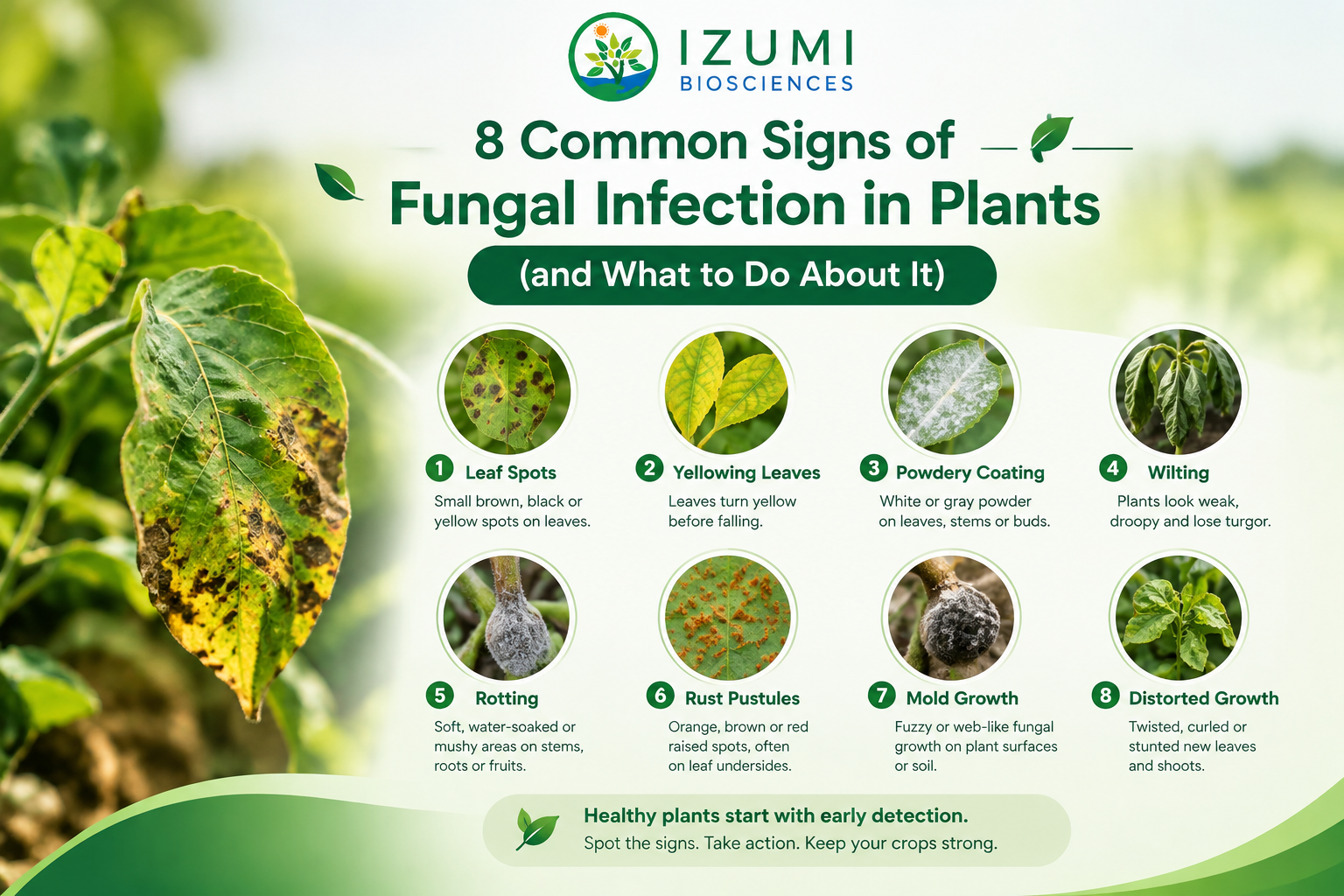
One of the earliest and most common signs of fungal infection in plants is the appearance of spots on leaves. These can be brown, black, yellow, or even reddish, depending on the type of fungus involved. The spots often start small and spread outward, sometimes merging into larger patches.
What to do: Remove and dispose of affected leaves right away. Avoid composting them, since fungal spores can survive and spread through compost. Keep an eye on nearby plants too, since spots are usually the first visible stage of fungal infection in plants and tend to spread quickly in humid conditions.
2. White or Gray Powdery Coating
A powdery, dusty layer on leaves, stems, or buds is a classic symptom of powdery mildew, one of the most widespread forms of fungal infection in plants. It usually appears first on the undersides of leaves before spreading across the plant.
What to do: Improve airflow around the plant by spacing it properly, and treat with a bio-based fungicide as soon as you spot the coating. Powdery mildew spreads fast in crowded, low-airflow conditions, so thinning out dense growth can make a real difference in controlling this form of fungal infection in plants.
3. Wilting Despite Regular Watering
If a plant looks wilted even though the soil is moist, fungal infection in plants is often the hidden cause. Fungi that attack the roots or stems can block the plant’s ability to take up water, leading to wilting that watering alone won’t fix.
What to do: Check the roots for soft, brown, or mushy sections. If root rot is present, the plant may need to be removed to protect others nearby. This type of fungal infection in plants is tricky because growers often respond by watering more, which only makes the underlying problem worse.
4. Yellowing Leaves That Spread Upward
While yellow leaves can happen for many reasons, a pattern that starts at the bottom of the plant and moves upward is a strong sign of fungal infection in plants, particularly soil-borne fungi affecting the root system.
What to do: Reduce watering frequency, improve soil drainage, and avoid letting water sit around the base of the plant.
5. Stunted or Distorted Growth
When new leaves or stems come in smaller, curled, or oddly shaped, it’s often because the plant is putting its energy into fighting infection rather than normal growth. This is a less obvious but still common sign of fungal infection in plants.
What to do: Support the plant with balanced nutrition and consider a biological crop protection treatment to help it recover.
6. Rotting Stems, Roots, or Fruit
Soft, mushy, or discolored rot on stems, roots, or fruit is one of the more serious signs of fungal infection in plants. By the time rot appears, the fungus has usually been active for a while.
What to do: Prune affected parts with clean, sterilized tools, and avoid overhead watering, which can spread spores to healthy tissue. At this stage, fungal infection in plants is usually well established, so quick action matters more than ever to protect the rest of the plant.
7. A Musty or Moldy Smell
Sometimes the first clue isn’t visual at all. A musty, earthy, or moldy smell around the base of a plant or in a greenhouse often points to fungal infection in plants, especially in humid or poorly ventilated spaces.
What to do: Increase ventilation, check for standing water, and inspect the soil and roots for early signs of infection.
8. Dark, Sunken Lesions on Stems or Fruit
Sunken, dark patches on stems or fruit, sometimes with a slightly cracked texture, are a sign of fungal infection in plants that has moved past the leaf stage. Left untreated, these lesions can girdle stems and kill the plant entirely.
What to do: Remove infected plant material immediately and apply a protective treatment to prevent the infection from reaching healthy growth.
Why Early Detection Matters
Fungal infection in plants rarely stays contained. Spores travel through wind, water, soil, and even garden tools, so a single infected plant can affect an entire field or garden bed within a short time. Spotting these signs early gives you the best chance to stop the spread before it causes serious crop loss.
Weather also plays a big role. Warm, humid conditions, poor drainage, and dense planting all create an environment where fungal infection in plants can take hold faster. Checking plants regularly, especially during the rainy season or periods of high humidity, makes it much easier to catch problems before they turn into a widespread outbreak.
A Sustainable Way to Manage Fungal Infection in Plants
Relying only on harsh chemical fungicides can weaken soil health over time and reduce the beneficial microbes that naturally protect plants. At Izumi Biosciences, we focus on biological solutions that work with a plant’s natural defenses instead of against them. Our bio-based products are built to manage fungal infection in plants while supporting long-term soil and crop health, season after season.
Regular field inspections, proper spacing, good drainage, and biological crop protection together form a strong, sustainable defense against fungal infection in plants. The goal isn’t just to treat the current problem. It’s to build plants and soil that are naturally more resistant going forward.
If you’ve noticed any of these eight signs in your crops, don’t wait for the problem to spread. Get in touch with Izumi Biosciences to find a bio-based solution suited to your fields, or visit izumibiosciences.in to learn more about our crop protection range.
FAQs
1. What is the most common sign of fungal infection in plants?
Discolored spots on leaves are usually the earliest and most noticeable sign, though symptoms vary depending on the type of fungus involved.
2. Can fungal infection in plants be cured?
Many cases can be managed effectively if caught early, especially with proper pruning, improved growing conditions, and bio-based treatments.
3. How does fungal infection in plants spread?
It spreads mainly through wind, water splash, contaminated soil, and tools used across multiple plants.
4. Are bio-based treatments effective against fungal infection in plants?
Yes. Bio-based treatments support the plant’s natural defenses and soil health, offering effective protection without the long-term downsides of heavy chemical use.
5. How often should plants be checked for fungal infection?
Weekly checks are a good habit, especially during humid seasons or periods of high moisture.