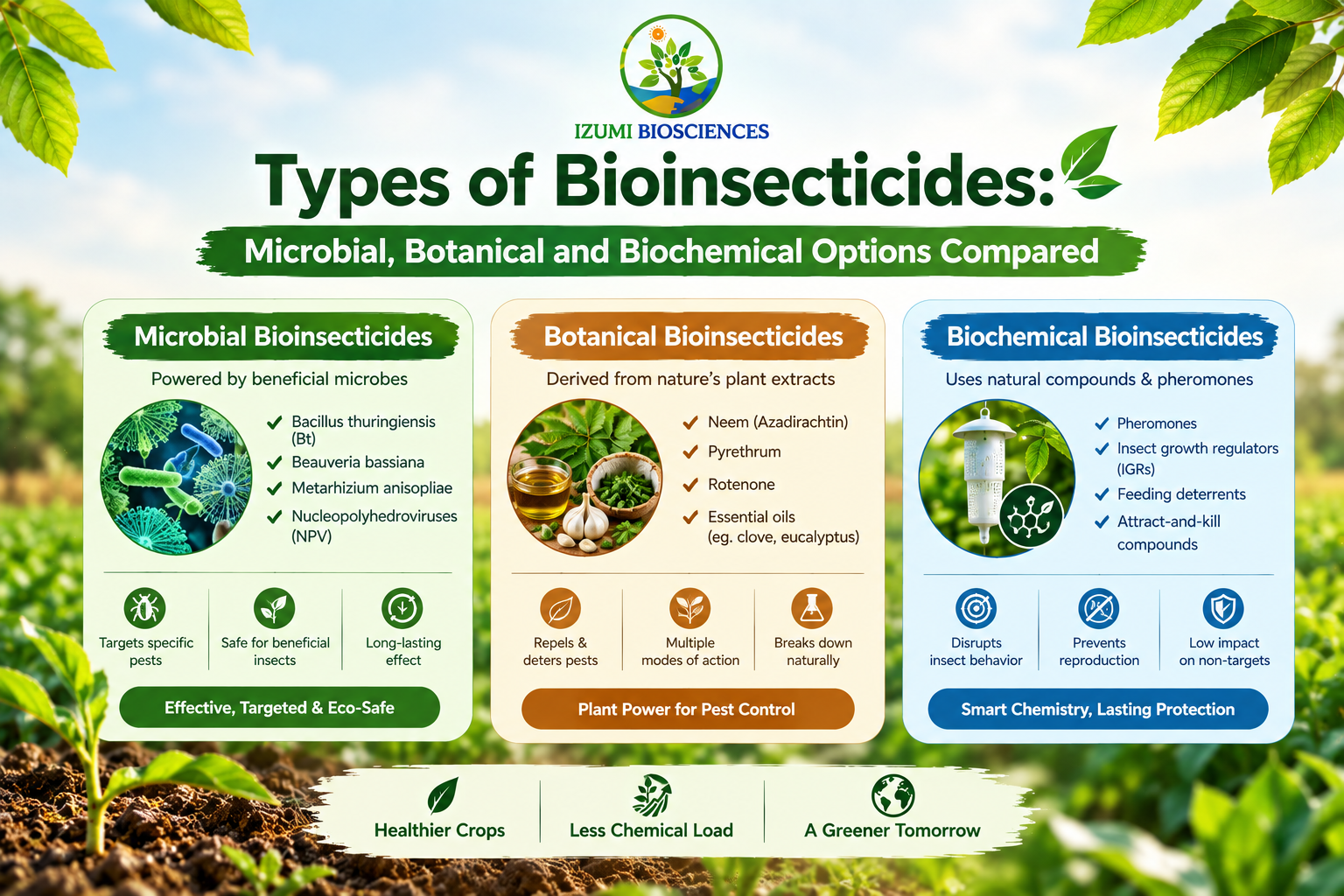
Types of Bioinsecticides: Microbial, Botanical and Biochemical Options Compared
Walk into any agri-input shop today and you’ll see the shelves changing. Bioinsecticides used to sit in a quiet corner as the “alternative” choice. Now they’re part of regular spray programmes on cotton, vegetables, pulses, and fruit. But here’s the catch: the word covers a lot of ground. A fungal spore powder, a neem-based extract, and an insect pheromone are all called bioinsecticides, and they work in very different ways.
So which one belongs in your field? Let’s break down the three main types, compare them honestly, and look at how to pick between them.
What Are Bioinsecticides, and Why Do They Matter?
Bioinsecticides are pest control products made from living organisms or from natural compounds. Instead of relying on synthetic chemistry, they use bacteria, fungi, viruses, plant extracts, or naturally occurring biochemicals to reduce insect damage.
Farmers are taking them seriously for a few practical reasons. Residue limits are tighter, especially for export produce. Pests keep building resistance to chemical molecules that once worked well. And beneficial insects like pollinators and predators often get caught in the crossfire of broad-spectrum sprays. Most bioinsecticides are far more selective, so they hit the pest and leave much of the good stuff alone.
They aren’t magic, though. Each type has its own strengths, its own limits, and its own ideal timing. That’s what the next sections are about.
Microbial Bioinsecticides: Living Organisms Working for You
Microbial products use disease-causing microbes that target insects specifically. Nature’s been doing this for millions of years. Formulation just makes it usable on a farm scale.
The most common groups include:
- Bacteria, such as Bacillus thuringiensis (Bt). Caterpillars eat the treated leaf, the bacterial proteins damage their gut, and feeding stops within hours. Bt is widely used against bollworms, diamondback moth, and other caterpillar pests.
- Fungi, such as Beauveria bassiana and Metarhizium anisopliae. These grow through the insect’s outer body, so they work on contact and can reach sucking pests like whiteflies, aphids, and thrips.
- Viruses, such as nucleopolyhedroviruses (NPV). Highly specific, often targeting a single pest species like Helicoverpa or Spodoptera.
Where they shine: selectivity, low residue concerns, and good fit for integrated pest management.
Where they struggle: microbes are living things, so heat, UV light, and dry weather can reduce performance. Most need humidity to work well, and results usually build over a few days rather than a few hours.
Botanical Bioinsecticides: Power From Plants
Botanical products come from plant extracts and oils, and they’ve been part of Indian farming long before anyone used the word “bioinsecticide.”
Neem is the obvious example. Its active compound, azadirachtin, doesn’t always kill insects outright. Instead, it interferes with feeding and growth, and it disrupts moulting. Other botanicals include pyrethrum, karanj (pongamia) oil, and extracts from garlic, chilli, and custard apple.
Where they shine: they’re familiar to farmers, generally easy to source, and often work on a wide range of soft-bodied pests. Many also act as repellents, which helps when you’re trying to protect young crops.
Where they struggle: botanicals break down quickly in sunlight, so they may need repeat applications. Quality also varies a lot between products. Active ingredient concentration matters here, and a poorly standardised extract can give patchy results.
Biochemical Bioinsecticides: Nature’s Signals and Regulators
This category surprises people. Biochemical products don’t necessarily kill anything directly. They use naturally occurring substances that change how insects behave or develop.
Examples include:
- Pheromones, which confuse mating or lure pests into traps
- Insect growth regulators, which interrupt normal development
- Natural repellents and attractants, which steer pests away from, or toward, specific spots
- Fatty acid and soap-based products, which affect soft-bodied insects on contact
Where they shine: they’re very target-specific and useful for monitoring and mass trapping, especially in orchards and vegetable belts.
Where they struggle: the effect is often indirect, so farmers used to “spray and see them drop” may need some adjustment. They work best as part of a broader plan, not as a standalone fix.
Microbial vs Botanical vs Biochemical: A Quick Comparison
| Feature | Microbial | Botanical | Biochemical |
| Source | Bacteria, fungi, viruses | Plant extracts and oils | Pheromones, natural regulators |
| Speed of action | Moderate (days) | Quick to moderate | Often indirect |
| Specificity | High | Moderate | Very high |
| Weather sensitivity | Sensitive to UV and dryness | Breaks down in sunlight | Varies by product |
| Best used for | Caterpillars, sucking pests | Soft-bodied pests, repellent action | Monitoring, mating disruption |
How to Choose the Right Bioinsecticides for Your Crop
There’s no single winner. The smarter question is: what problem are you solving, and when?
Start with the pest. Caterpillars often respond well to Bt or NPV. Whiteflies and aphids may call for fungal products or botanicals. If you’re managing an orchard and want to track pest pressure, pheromone traps earn their place.
Then consider the crop stage and weather. Early-stage infestations are much easier to handle with bioinsecticides than a full-blown outbreak. Apply in the evening or on cloudy days, since sunlight can knock down both microbes and plant extracts.
Finally, think about your whole programme. Many growers get the best results by rotating or combining bioinsecticides with cultural practices, resistant varieties, and, where needed, selective chemicals. That’s the idea behind integrated pest management, and it’s where biologicals fit most naturally.
A Few Mistakes Worth Avoiding
Farmers who say bioinsecticides “didn’t work” usually hit one of these snags:
- Spraying too late, after the pest population has already exploded
- Mixing with incompatible fungicides or chemicals that kill the microbes
- Ignoring storage instructions, especially for living formulations
- Expecting instant knockdown from a product that works over several days
Read the label, check compatibility, and give the product a fair trial window. It makes a bigger difference than most people expect.
Exploring Bioinsecticides With Izumi Biosciences
If you’re weighing up your options, it helps to talk with a team that understands both the science and the field reality. Izumi Biosciences works with growers, dealers, and agri-businesses looking at biological crop protection, and the team can help you think through which approach fits your crops, your pests, and your budget. Have a look at Izumi Biosciences to learn more, or get in touch with your questions.
Picking the Right Bioinsecticides for Healthier Crops
Microbial, botanical, and biochemical options each solve a different piece of the pest puzzle. Match the product to the pest, time it right, and treat it as one part of a bigger plan. Do that, and bioinsecticides can protect your yield without leaving a heavy footprint on your soil, your produce, or the insects you actually want around.
Curious which option suits your next crop cycle? Reach out to the Izumi Biosciences team and start the conversation.
Frequently Asked Questions About Bioinsecticides
Are bioinsecticides safe for humans and the environment?
Generally, they’re considered lower risk than broad-spectrum synthetic pesticides, since most target specific pests and break down naturally. That said, you should still follow label directions, use protective gear, and respect pre-harvest intervals.
Do bioinsecticides work as fast as chemical insecticides?
Usually not. Chemical products often knock pests down within hours, while many bioinsecticides take a few days to show full results. Their advantage lies in selectivity, resistance management, and lower residue concerns.
Can I use different types of bioinsecticides together?
Sometimes, yes. Microbial and botanical products are often combined in a programme, but compatibility isn’t guaranteed. Check the label and, if in doubt, run a small test or ask the manufacturer first.
How should I store bioinsecticides?
Keep them in a cool, dry place away from direct sunlight. Microbial products especially can lose viability if they get too hot, so watch the shelf life and storage guidance on the pack.
Are bioinsecticides suitable for organic farming?
Many are, but not all. Certification rules vary, so check whether a specific product is approved under the organic standard you follow before using it.