Common Pests in Vegetable Farming
Growing vegetables can be rewarding, but insect pests can pose a serious challenge to farmers. Aphids, whiteflies, thrips, caterpillars, and borers can attack crops at various growth stages on leaves, shoots, flowers, and fruits. When left unchecked, infestation can decrease yield and quality of crops.
For this reason, vegetable pest management in India should begin with knowing what to look for in the field. Early detection, frequent scouting and appropriate control measures enables farmers to respond to pest issues before they become unmanageable.
Why Do Vegetable Crops Attract Pests?
Vegetable plants have tender leaves, young shoots, flowers, and developing fruits that provide suitable feeding sites for many insects. Weather conditions can also influence pest activity. Warm temperatures, crop growth, and the availability of suitable host plants may allow certain pest populations to increase.
Pest problems do not always become visible immediately. A few insects may initially remain under leaves or around growing points. By the time clear damage appears, their numbers may already have increased.
Good vegetable pest management in India therefore depends on regular observation rather than waiting until an entire section of the field shows visible damage.
Common Pests Found in Vegetable Crops
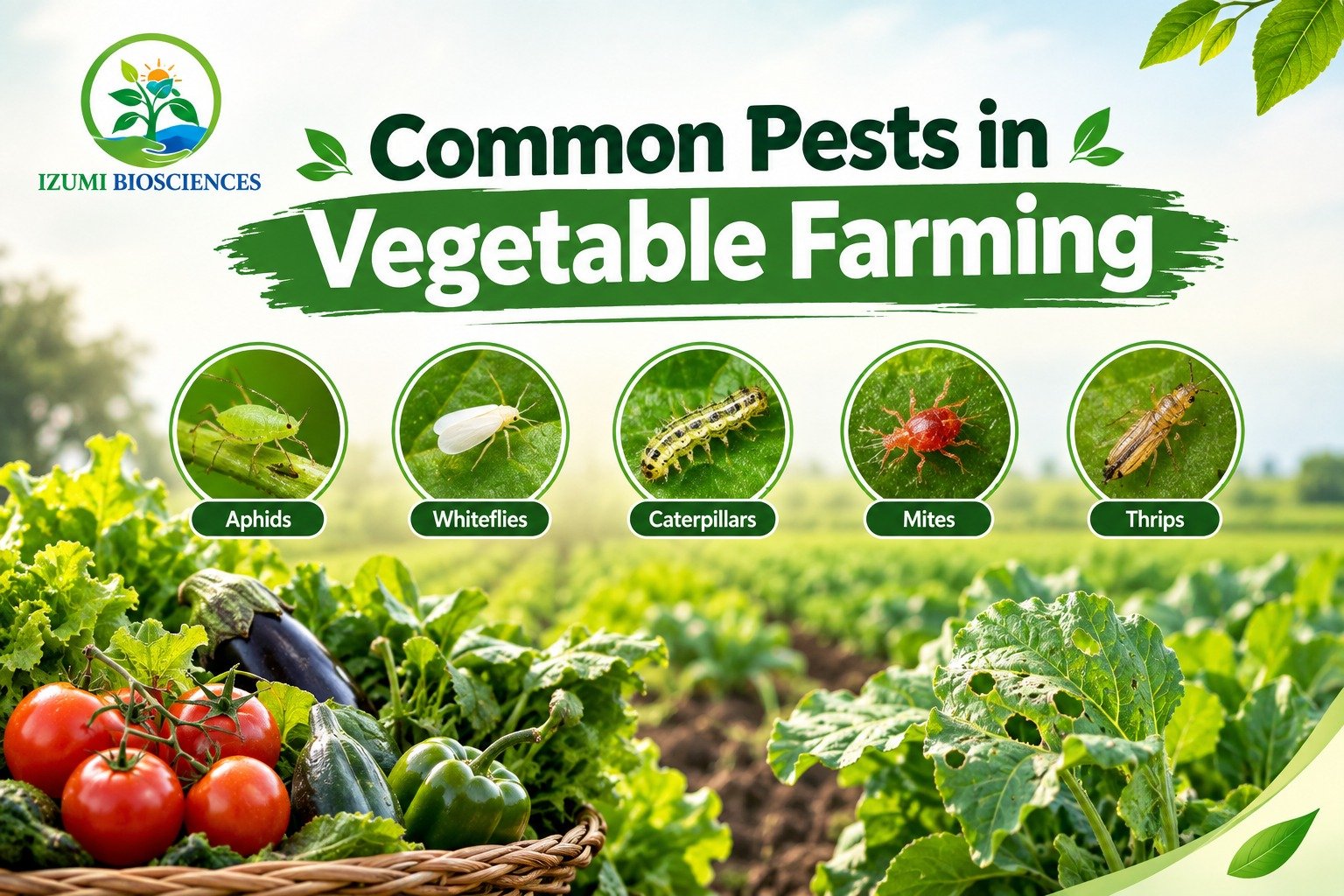
Different vegetables face different pest problems, but several insects are commonly found across vegetable-growing areas.
Aphids
Aphids are small, soft-bodied insects that often gather around young leaves, shoots, and stems. They feed by sucking sap from plants.
Infested plants may show curled, yellowing, or distorted leaves and weaker growth. Aphids can also produce honeydew, a sticky substance that may encourage sooty mold on plant surfaces.
Because aphids can increase quickly under favorable conditions, farmers should pay particular attention to tender plant growth when inspecting their fields.
Whiteflies
Whiteflies are tiny insects that commonly stay on the underside of leaves. When an affected plant is disturbed, adult whiteflies may fly up from the foliage.
They feed on plant sap and can weaken plants when their numbers become high. Some whitefly species can also contribute to the spread of plant viruses.
Yellowing leaves, reduced plant vigor, or clusters of small white insects beneath leaves can indicate a possible infestation. Regular inspection is especially useful in crops known to attract these pests.
Thrips
Thrips are very small and slender, making them easy to overlook during a quick field visit. They may feed on leaves, flowers, and young fruits.
Their feeding can leave silvery patches or streaks on leaves. Flowers and developing fruits may also become distorted or scarred.
Thrips can be particularly troublesome when farmers are growing vegetables where appearance and market quality are important. Checking flowers and newly developing plant parts can help identify the problem earlier.
Fruit and Shoot Borers
Fruit and shoot borers can cause considerable damage to vegetables such as brinjal and other susceptible crops. The larvae may enter young shoots or developing fruits and feed inside the plant tissue.
A damaged shoot may wilt, while fruits can develop holes and become unsuitable for the market. Once larvae have entered plant tissue, they are more difficult to reach.
Farmers should inspect shoots and fruits regularly and remove severely affected plant parts where practical. Field sanitation can also help reduce the number of pests that remain in the crop.
Leaf-Eating Caterpillars
Caterpillars are common pests in vegetable crops, particularly leafy vegetables and crops such as cabbage and cauliflower. They feed directly on leaves and can create holes or large areas of missing foliage.
Young larvae can be difficult to spot, so farmers should inspect both sides of leaves. Eggs and small larvae may be present before major feeding damage becomes visible.
If the infestation becomes severe, extensive leaf damage can affect crop development and reduce the marketable quality of produce.
Cutworms
Cutworms can be especially damaging during early crop establishment. They generally remain close to the soil and may cut young plants near the base.
Farmers may notice missing seedlings or young plants that have suddenly fallen over. Weeds and plant residues can provide shelter for these pests, so maintaining good field hygiene can be useful as part of an overall management strategy.
How to Recognize Pest Damage
Recognizing the early signs of pests in vegetable crops gives farmers a better chance of responding before the problem spreads.
Common signs include:
- Curled or distorted leaves
- Small holes or feeding marks
- Yellowing foliage
- Silvery patches on leaves
- Wilting shoots
- Damaged or bored fruits
- Sticky deposits on leaves
- Insects gathered under leaves
- Stunted or uneven plant growth
However, these symptoms are not always caused by insects. Nutrient deficiencies, fungal diseases, water stress, and other crop problems can sometimes produce similar signs.
Farmers should therefore examine the plant carefully before deciding on a treatment. Correct identification is an important first step in vegetable pest management in India.
Practical Ways to Manage Vegetable Pests
Effective vegetable pest management in India does not always mean immediately applying an insecticide. A combination of preventive practices, regular monitoring, and appropriate interventions can provide a more practical approach.
Monitor the Crop Regularly
Field scouting should be part of the normal crop routine. Walk through different areas of the field and examine leaves, stems, flowers, and fruits.
Do not inspect only the healthiest-looking plants. Check weak or damaged plants as well because they may show the first signs of an infestation.
Early detection gives farmers more time to decide what action is appropriate.
Maintain Good Field Hygiene
Weeds and leftover crop material can provide food or shelter for some pests. Managing weeds and removing badly infested plant parts can help reduce favorable conditions.
After harvesting, proper crop residue management can also reduce places where certain insects may survive between cropping cycles.
Conserve Beneficial Insects
A vegetable field contains many insects, but not all of them are harmful. Ladybird beetles, lacewings, spiders, parasitoids, and other natural enemies can help suppress certain pest populations.
Unnecessary use of broad-spectrum insecticides can affect these useful organisms. Farmers should therefore identify the pest and assess the situation before choosing a control measure.
Use Physical Methods Where Suitable
Some infestations can be reduced through simple physical measures. Removing affected leaves, shoots, fruits, or visible larvae can be useful when the problem is limited.
Depending on the crop and pest, traps and other physical methods can also form part of an integrated management plan.
Choose Crop Protection Products Carefully
When pest pressure becomes high enough to require treatment, the product should be selected according to the pest, crop, growth stage, and recommended use.
Farmers should always follow the product label and prescribed application rate. Using more than the recommended quantity does not necessarily provide better control and may increase costs and other risks.
The Role of Integrated Pest Management
Integrated Pest Management, or IPM, combines different methods instead of depending on a single control measure. It may include crop monitoring, sanitation, cultural practices, biological control, mechanical methods, and suitable crop-protection products when required.
This makes vegetable pest management in India more adaptable because pest pressure can differ from one region, season, crop, and field to another.
For example, a pest problem in a tomato field may require a different approach from an infestation in cabbage. Farmers should consider the crop, pest species, crop stage, and local conditions before selecting a management strategy.
How to Reduce Future Pest Problems
Managing an infestation is only one part of crop protection. Farmers should also consider practices that can reduce pest problems in future crops.
Crop rotation can be useful in suitable farming systems. Removing volunteer plants, managing weeds, using healthy planting material, and maintaining field sanitation can also reduce potential sources of pest buildup.
Keeping basic records is another simple but useful practice. Farmers can note when a pest appeared, which crop stage was affected, what weather conditions were present, and which management measure provided useful results. These records can help with planning during the next growing season.
A Smarter Approach to Vegetable Pest Management
Managing pests in vegetable crops is not about eliminating every insect from the field. The objective is to keep harmful pest populations at manageable levels while protecting crop health and avoiding unnecessary interventions.
Regular scouting makes it easier to understand what is happening in the field. When farmers identify a pest early and select a suitable response, vegetable pest management in India becomes more timely and practical.
At Izumi Biosciences, we focus on crop-care and biological solutions that can support farmers as part of a responsible crop management program. Our approach complements good agricultural practices, regular monitoring, and integrated pest management rather than replacing the need for proper field assessment.
Choose Izumi Biosciences for Better Crop Care
Healthy vegetable production starts with understanding the problem before taking action. If pests are affecting your vegetable crops, Izumi Biosciences can help you explore suitable crop-care solutions based on a more informed and responsible approach.
Looking for better ways to manage crop pests? Connect with Izumi Biosciences to learn more about our biological and crop-care solutions and take a smarter approach to vegetable pest management.