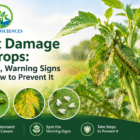
Pest Damage in Crops: Causes, Warning Signs and How to Prevent It
A field can look fine on a Monday and show real trouble by Friday. That’s how fast pest damage in crops can move once conditions line up in the pest’s favour. By the time the damage is obvious to the eye, you’ve often already lost a chunk of your yield, not just to the pest itself but to the delay in catching it.
Understanding why pest damage happens, how to spot it early, and what actually works to prevent it can save a season. Let’s go through it properly.
What Counts as Pest Damage in Crops?
Pest damage in crops covers any loss or injury caused by insects, mites, nematodes, rodents, or other organisms that feed on, tunnel into, or otherwise harm a plant. It shows up in different forms depending on the pest and the crop:
- Chewed or skeletonised leaves
- Sap being sucked out, leaving curled or yellowing foliage
- Bored stems, fruits, or pods
- Root feeding that weakens the whole plant
- Virus transmission, where the pest itself is minor but the disease it spreads is not
Some damage is cosmetic and barely dents yield. Other damage, especially to fruiting or reproductive parts, can wipe out a harvest. Knowing which is which helps you decide how urgently to act.
Why Pest Damage in Crops Happens
Pest pressure rarely comes from one single cause. It’s usually a mix of conditions that tip the balance toward the pest.
Weather and season. Warm, humid weather speeds up insect breeding cycles. A short dry spell can also stress plants and make them more attractive to sap-sucking pests.
Monoculture and continuous cropping. Growing the same crop season after season gives pests a steady, predictable food source, letting populations build up year on year.
Loss of natural enemies. Overuse of broad-spectrum chemical sprays can wipe out the predators and parasites that would otherwise keep pest numbers in check, sometimes triggering a worse outbreak once the chemical effect wears off.
Resistant pest populations. Repeated use of the same chemical mode of action allows resistant individuals to survive and multiply, so the same spray stops working as well over time.
Poor field hygiene. Leftover crop residue, weeds, and volunteer plants can shelter pests between seasons, giving them a head start on the next crop.
Understanding the “why” matters because it points you toward prevention, not just reaction.
Common Warning Signs of Pest Damage in Crops
Catching pest damage in crops early is almost always cheaper than treating a full-blown outbreak. Here’s what to watch for during regular field walks:
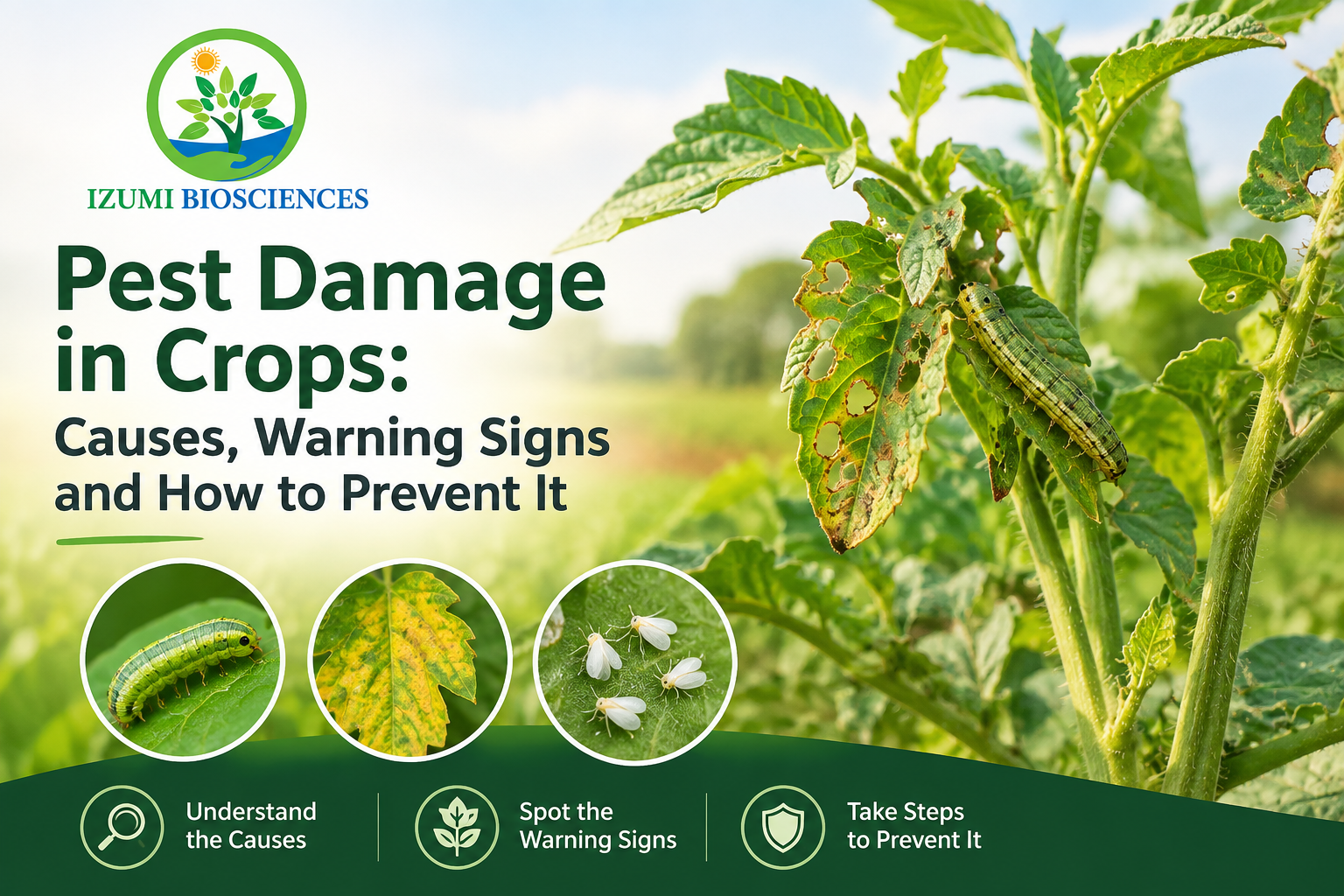
- Irregular holes or notches in leaves — often caterpillars or beetles feeding at night.
- Yellowing, curling, or sticky leaves — a sign of sap-sucking pests like aphids, whiteflies, or thrips, sometimes accompanied by sooty mould on the honeydew they leave behind.
- Wilting despite adequate water — can point to root-feeding pests or stem borers cutting off the plant’s internal transport.
- Small holes in fruits or pods with visible frass (insect droppings) nearby usually a sign of fruit or pod borers.
- Patchy, uneven crop stands — could mean soil pests like termites or white grubs attacking at the root zone.
- Presence of eggs or larvae on the underside of leaves, which often go unnoticed until the damage is already visible.
Scouting twice a week during vulnerable growth stages catches most problems before they become expensive.
The Real Cost of Ignoring Pest Damage in Crops
It’s tempting to wait and see, especially when damage looks minor. But pest damage in crops compounds fast. A small aphid colony can multiply into thousands within a couple of weeks under the right conditions. A few borer larvae in a fruiting crop can spread to a large share of the harvest before the first spray goes out.
Beyond yield loss, there’s quality loss too. Buyers, especially export markets, reject produce with visible pest damage or excess pesticide residue. That means even a partially damaged crop can lose most of its market value, not just the physically affected portion.
How to Prevent Pest Damage in Crops
Prevention works better than cure here, and it usually costs less too.
Start with resistant or tolerant varieties where available. They won’t stop pests entirely, but they reduce the speed and severity of damage.
Rotate crops to break the pest’s life cycle. A pest that thrives on one crop family often struggles when a different family takes its place the next season.
Encourage natural enemies. Ladybird beetles, spiders, parasitic wasps, and birds all help keep pest numbers down. Avoiding unnecessary broad-spectrum sprays protects this natural defence system.
Use pheromone traps and sticky traps to monitor pest activity early, so you know when populations cross a threshold worth acting on rather than spraying on a fixed calendar.
Bring in biological and bio-based inputs. Microbial products like Bt and entomopathogenic fungi, along with botanical extracts like neem, can manage pest populations with far less impact on beneficial insects and produce quality than broad-spectrum chemicals.
Maintain field hygiene. Clear crop residue, manage weeds, and avoid leaving volunteer plants that give pests a bridge between seasons.
Time your interventions. Early growth stages and flowering or fruiting periods are usually the most sensitive. Acting at the right window matters as much as choosing the right product.
Integrated Pest Management: The Long-Term Answer
None of these tactics work as well alone as they do together. Integrated Pest Management (IPM) combines resistant varieties, cultural practices, biological controls, monitoring, and, where truly necessary, targeted chemical use. The goal isn’t zero pests. It’s keeping pest damage in crops below the level that actually hurts your yield or income, while protecting the ecosystem that helps you long term.
This is also where biological pest control products earn their place. They fit naturally into an IPM programme because they target specific pests without disrupting the predators and pollinators doing quiet work in the background.
Managing Pest Damage in Crops With Izumi Biosciences
If pest pressure has been eating into your yields, it’s worth stepping back and looking at your programme as a whole rather than just reaching for the next spray. Izumi Biosciences works with growers and agri businesses on biological approaches to crop protection, and the team can help you figure out which pests are doing the most damage and what fits your crop calendar. Visit Izumi Biosciences to learn more, or reach out directly with your field questions.
Staying Ahead of Pest Damage in Crops
Pest damage in crops is rarely about one bad day. It builds from small, often missed signs into losses that are much harder to reverse. Regular scouting, a mix of preventive practices, and the right biological tools can keep that curve flat instead of steep. The earlier you catch it, the less it costs you in yield, quality, and peace of mind.
Want help building a pest management plan for your next crop cycle? Get in touch with the Izumi Biosciences team.
Frequently Asked Questions About Pest Damage in Crops
How do I know if leaf damage is from pests or disease?
Pest damage usually shows physical signs like holes, chew marks, sticky residue, or visible insects and eggs. Disease damage tends to show as spots, lesions, or discoloration without physical feeding marks. When unsure, check the underside of leaves and look closely for insects before assuming disease.
What’s the fastest way to reduce pest damage in crops once it starts?
Identify the pest correctly first, since the wrong treatment wastes time and money. Then choose a targeted option, biological or chemical, suited to that pest and crop stage, and treat promptly rather than waiting for numbers to build further.
Can pest damage in crops be completely eliminated?
Realistically, no. The goal is to keep pest populations below the threshold where they cause economic loss, not to remove every pest from the field. Some level of pest presence is normal and even helps support natural predator populations.
Are biological pest control methods effective against severe infestations?
They work best when used early or as part of a regular programme rather than as a last resort during a severe outbreak. For heavy infestations, biological and other methods are often combined for faster control.
How often should I scout my field for pest damage?
Twice a week is a reasonable baseline during sensitive growth stages like flowering and fruiting. Increase frequency during warm, humid weather when pest populations can build up quickly.