Complete Guide to Bio Fungicides
Fungal diseases can affect crops at almost every stage of growth. Root rot, damping-off, powdery mildew, wilt and leaf spots can reduce plant health, plant quality and yield. Farmers often use fungicides to manage these diseases, but biological options have also become an important part of modern crop protection.
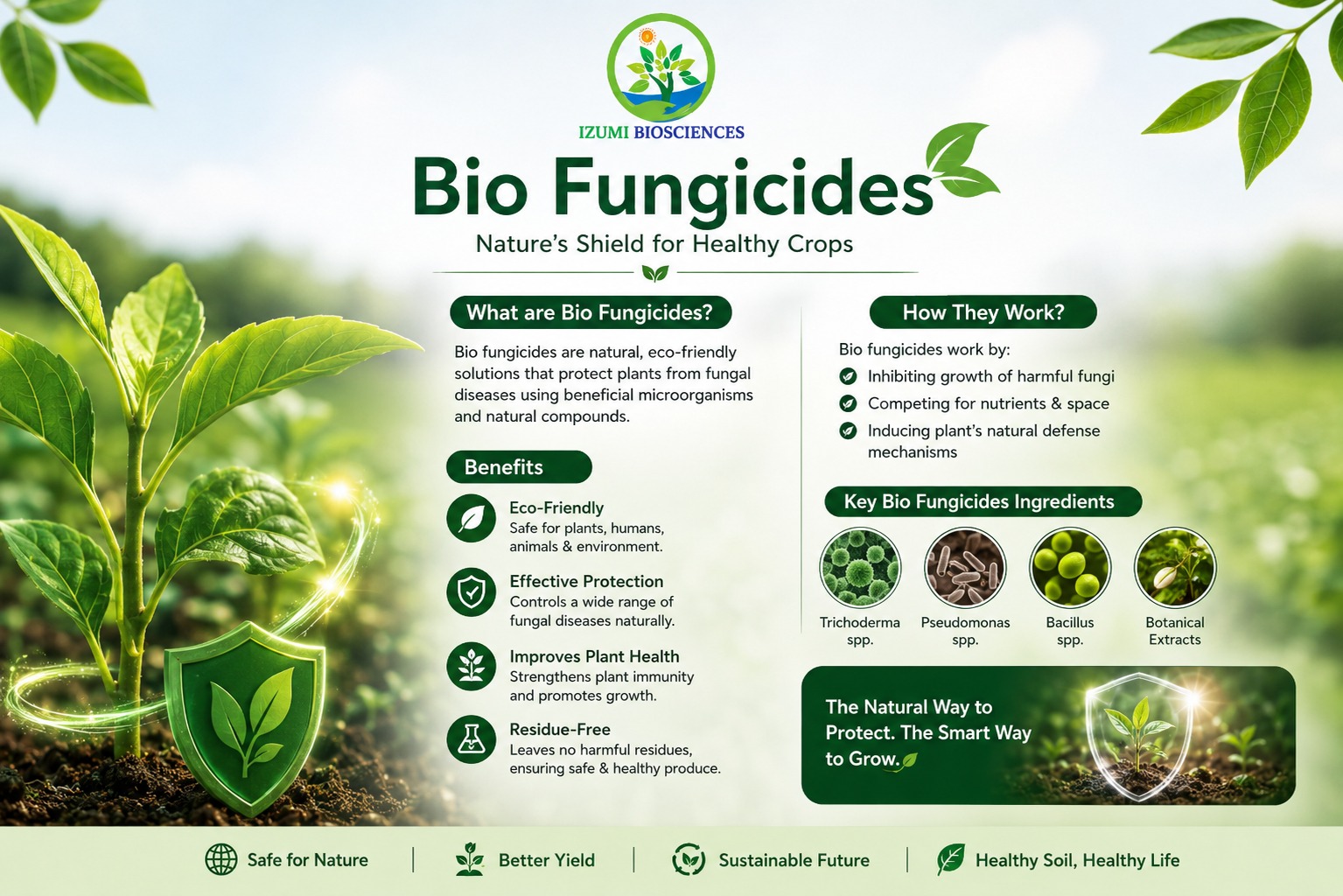
Well then, what is a biofungicide? A biofungicide is a biological crop protection product that uses beneficial microorganisms and/or natural products to control or suppress fungi in plants. Biofungicides can work in several ways, such as competing with pathogenic fungi, synthesizing chemicals that inhibit pathogens or triggering the plant’s own natural defense mechanisms, depending on the formulation.
This guide explains biofungicides, major types, advantages, disadvantages and how they can be used in an effective crop-management program.
What is a biofungicide?
A biofungicide is a biological product for control of fungal/fungus-like plant pathogens. It includes beneficial bacteria, fungi or naturally occurring compounds that help control disease-causing organisms.
Unlike many conventional fungicides that directly affect fungal cells through specific chemical modes of action, biological products can work through several natural mechanisms.
Some useful microbes colonize roots or other parts of plants and take up space and nutrients from harmful microbes. Others generate compounds that inhibit the growth of pathogens. Some can also support the plant’s defense mechanisms.
The method of action varies with the microorganism or active ingredient included in the product.
How Do Bio Fungicides Work?
There are various modes of action of biofungicides for plant diseases. This knowledge will help in understanding the importance of selection of products and timing of application.
Competition With Harmful Pathogens
The beneficial microorganisms can occupy space around the root system of plants or surfaces of plants. They can colonize and/or be established before or at the same time as the harmful pathogens; they can compete for nutrients and colonization sites.
This can make it more difficult for disease-causing organisms to establish and spread.
Production of Antifungal Compounds
Some beneficial microorganisms produce natural substances that can suppress the growth of harmful fungi. These substances can interfere with pathogen development and help reduce disease pressure.
Parasitism of Harmful Fungi
Certain beneficial fungi can attack or grow around other fungi. This biological interaction can damage or suppress the pathogen.
This mechanism is commonly associated with some species of Trichoderma, which are widely studied and used in biological disease management.
Supporting Plant Defense
Some microorganisms can interact with plants in ways that activate or strengthen their natural defense responses. This does not make a plant immune to disease, but it can help the plant respond more effectively to certain disease pressures.
Major Types of Bio Fungicides
Bio fungicides can contain different microorganisms or natural substances. The most suitable type depends on the crop, disease, environmental conditions, and application method.
1. Trichoderma-Based Bio Fungicides
Trichoderma species are among the most commonly used beneficial fungi in biological crop protection.
They can interact with harmful soil-borne fungi through competition, direct interaction, and production of compounds that inhibit pathogens. Certain Trichoderma strains can also colonize plant roots and support healthier root environments.
These products are commonly used in soil treatment, seed treatment, nursery applications, and other crop-protection programs.
2. Bacillus-Based Bio Fungicides
Species from the Bacillus group are also used in biological disease management. These beneficial bacteria can colonize plant surfaces and the rhizosphere while producing compounds that can suppress certain pathogens.
Some Bacillus strains are also known for their ability to form durable spores, which can contribute to product stability when properly formulated.
3. Pseudomonas-Based Products
Certain beneficial Pseudomonas species can be used for biological management of plant diseases.
These bacteria can colonize the root zone and compete with harmful microorganisms. Some strains also produce substances that suppress pathogens and interact with plants in ways that support their natural defense mechanisms.
4. Other Microbial Bio Fungicides
Other microorganisms may also be used in biological disease-management products. Their effectiveness depends on the strain, formulation, target pathogen, crop, and application conditions.
This is why farmers should not select a bio fungicide solely because it is described as biological. The active microorganism should match the disease-management requirement.
What Are the Benefits of Bio Fungicides?
Bio fungicides can provide several advantages when incorporated into a well-planned crop-protection program.
Targeted Disease Management
Many biological products work against specific groups of pathogens or through specific biological interactions. This can make them useful as part of targeted disease-management programs.
Support for Integrated Disease Management
Bio fungicides can be combined with other disease-management practices, including crop rotation, resistant varieties, proper irrigation, sanitation, and appropriate chemical fungicides where necessary.
Using multiple approaches can help reduce dependence on a single disease-control method.
Useful for Soil and Root Health
Some microbial bio fungicides are applied to seeds or soil and can establish around plant roots. Their presence can contribute to a healthier microbial environment around the root zone.
Biological Mode of Action
Bio fungicides rely on living microorganisms or naturally derived compounds rather than conventional synthetic active ingredients. This makes them useful options for farmers looking to include biological products in their crop-protection programs.
However, biological does not automatically mean suitable for every farming system or certified organic production. Farmers should check product registration and certification requirements before use.
Organic Fungicide for Plants: Is It the Same as a Bio Fungicide?
The terms organic fungicide for plants and bio fungicide are sometimes used together, but they should not automatically be treated as identical.
A bio fungicide refers to the biological nature of the product or its active ingredient. An organic fungicide generally refers to a product permitted under a particular organic farming standard or made from ingredients accepted by that standard.
A biological product is not automatically approved for certified organic farming. Farmers following organic standards should check the product’s certification and applicable requirements before application.
When Should Bio Fungicides Be Applied?
Application timing can have a major effect on the performance of a bio fungicide.
In many situations, biological products work better when used preventively or at the early stages of disease development rather than after a severe infection has spread throughout the crop.
Seed and soil applications can be useful when managing soil-borne pathogens. Foliar applications may be more appropriate for certain diseases that develop on leaves, stems, flowers, or fruits.
The correct timing depends on the product and target disease. Farmers should always follow the manufacturer’s application instructions rather than using the same schedule for every biological product.
How to Use Bio Fungicides Effectively
Correct application is essential for getting consistent results from biological products.
Start by identifying the disease accurately. Symptoms such as yellowing, wilting, leaf spots, or root damage can have several possible causes. Treating the wrong problem with a bio fungicide will not provide the expected results.
Choose a product with an active microorganism suitable for the target pathogen and crop. Check the label for recommended dosage, application method, water volume, storage requirements, and treatment interval.
Environmental conditions should also be considered. Temperature, moisture, sunlight, soil conditions, and the overall health of the crop can influence microbial activity.
Avoid mixing biological products with incompatible chemicals or disinfectants unless the manufacturer confirms compatibility. Some chemical inputs can reduce the viability of beneficial microorganisms.
Limitations of Bio Fungicides
Bio fungicides are useful tools, but they are not a universal solution for every fungal disease.
Their performance can vary according to environmental conditions, pathogen pressure, crop variety, application timing, and product quality. Severe disease outbreaks may require a broader integrated disease-management approach.
Storage is another important consideration. Products containing living microorganisms may require specific storage conditions to maintain their viability and effectiveness.
Farmers should also understand that biological disease control often works best as part of a preventive strategy. Waiting until a crop has suffered extensive disease damage can make disease management more difficult.
Bio Fungicides and Integrated Crop Protection
The best disease-management programs generally use several compatible practices rather than relying on one product.
- Farmers can combine healthy planting material, crop rotation, field sanitation, appropriate irrigation, balanced nutrition, resistant varieties where available, biological products, and chemical fungicides when required.
- That’s why biofungicides can serve as one component of an integrated disease-management strategy.
- Regular field monitoring is also important. Early identification of disease symptoms gives farmers more time to select an appropriate intervention and prevent the problem from becoming widespread.
The Role of Jaivik Fungusnashak in Sustainable Agriculture
Jaivik fungusnashak is a commonly used Hindi term for biological fungicide products. As farmers look for biological approaches to crop protection, these products can offer an additional option for managing plant diseases.
Their role is not simply to replace every conventional fungicide. Instead, they can be incorporated into a broader crop-protection plan that focuses on prevention, early intervention, and responsible input use.
For farmers interested in biological crop protection, selecting the right microorganism and applying it at the correct crop stage is more important than simply choosing a product because it is labeled biological.
Choose the Right Biological Solution for Your Crop
So, what is bio fungicide? It is a biological crop-protection product that uses beneficial microorganisms or naturally derived substances to help suppress plant diseases caused by harmful fungi and related pathogens.
Bio fungicides based on microorganisms such as Trichoderma, Bacillus, and beneficial Pseudomonas can work through competition, pathogen suppression, direct interaction, and support for plant defense responses.
For farmers considering an organic fungicide for plants or jaivik fungusnashak, the right choice should be based on the crop, disease, active microorganism, application timing, and product instructions.
We at Izumi Biosciences offer biological agricultural solutions designed to support modern crop-management practices. Visit our products to learn more about our bio-based products and find suitable solutions for your crop protection needs.