Importance of Growth Promoters at Nursery Stage
In the nursery stage, a plant begins to form its roots and leaves for a successful life. Seedlings need to be able to stand up well and have a strong stem, healthy leaves, and stable roots before they are put into the field. Avoiding any weakness in this stage of the crop cycle can influence the establishment and performance of the plant later in the cycle.
This means nursery management is an important component for the successful production of crops. Growth promoters may assist in the normal growth of early plants in addition to the quality seeds, appropriate growing media, balanced nutrition and correct irrigation.
For growers looking to improve nursery stage me growth promoter practices and adopt a more effective approach to nursery plant care organic, choosing suitable biological and plant-supporting inputs can help create healthier and more uniform seedlings.
At Izumi Bioscience, the focus is on science-based agricultural solutions that support crop development at different growth stages, including the critical nursery period.
Why Is the Nursery Stage Important?
The first few weeks of plant growth are highly sensitive. Seedlings are still developing their roots and have limited ability to absorb water and nutrients. They can also be affected by changes in moisture, temperature, light, and growing conditions.
Poor management during this period can result in weak seedlings, uneven growth, poor root formation, and difficulties after transplanting.
A well-managed nursery helps plants develop:
- Healthy root systems
- Strong stems
- Balanced leaf growth
- Uniform plant size
- Better transplanting ability
The objective is not simply to grow seedlings faster. The focus should be on producing plants with balanced growth and enough strength to establish successfully in their next growing environment.
What Are Growth Promoters?
Growth promoters are agricultural formulations designed to support natural plant processes. Depending on the product, they may contain plant extracts, amino acids, seaweed-based compounds, humic substances, micronutrients, or other bioactive ingredients.
These products are used to support processes related to root growth, nutrient utilization, vegetative development, and stress response.
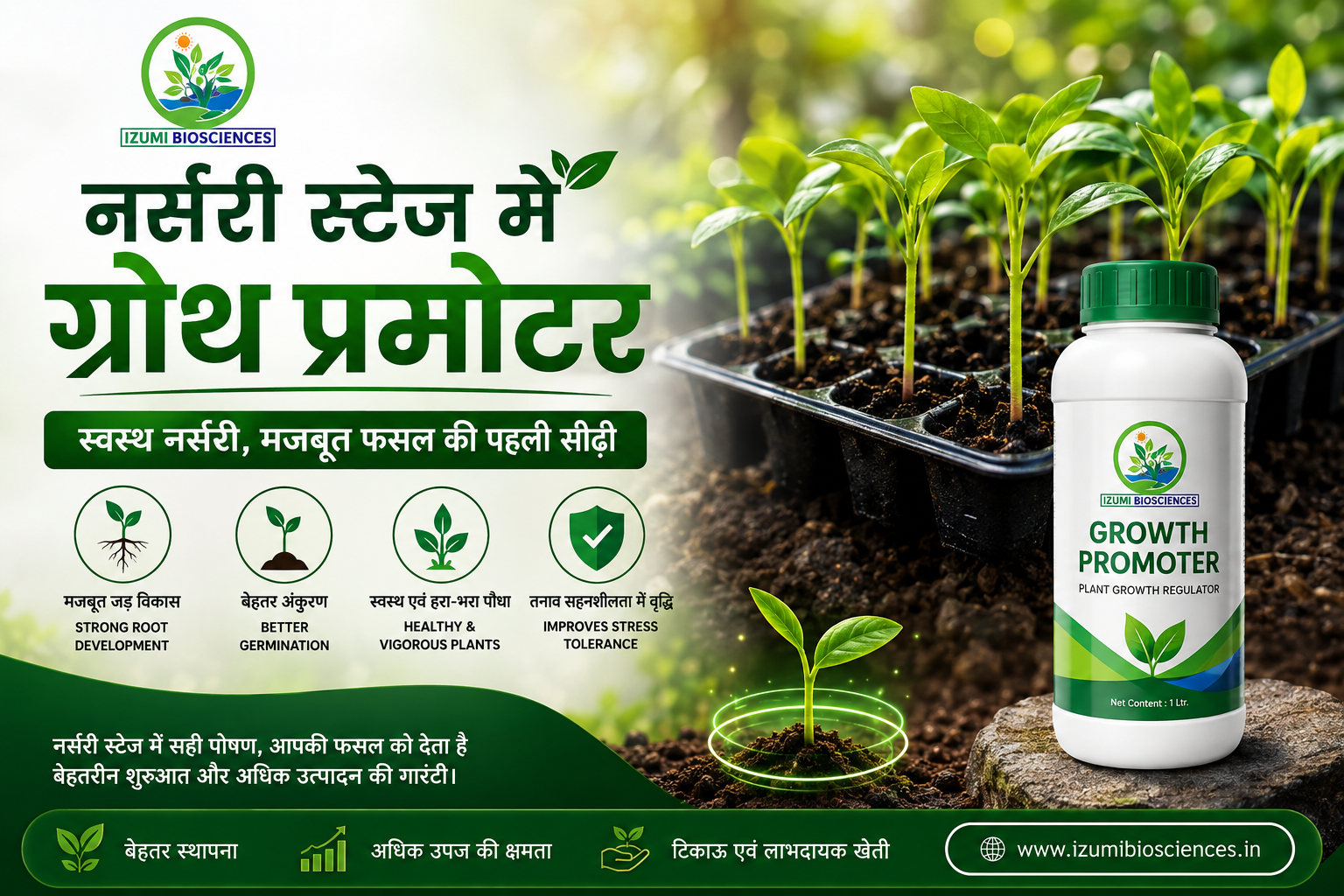
The role of a nursery stage me growth promoter is to provide additional support during a period when seedlings are establishing their basic structure. It should be used alongside proper irrigation, nutrition, and nursery hygiene rather than as a replacement for these practices.
Supporting Strong Root Development
Roots are one of the most important parts of a young plant. They absorb water and nutrients and help anchor the plant in the growing medium.
At the nursery stage, root development determines how effectively a seedling can establish after transplanting. A poorly developed root system can make plants more vulnerable to moisture changes and transplant stress.
Suitable growth-promoting inputs can support root initiation and the development of a stronger root network. Healthy roots also help plants access nutrients more efficiently.
This can contribute to:
- Better water uptake
- Improved nutrient absorption
- Stronger seedling establishment
- More consistent growth
- Better readiness for transplanting
For nursery plant care organic, growers can combine suitable biological growth-support products with quality growing media and balanced nutrient management.
Encouraging Uniform Seedling Development
Uniform seedlings are easier to manage. When plants in a nursery develop at similar rates, irrigation, nutrition, and transplanting can be planned more efficiently.
Uneven growth often results from inconsistent watering, poor seed quality, unsuitable growing media, or nutrient imbalance. Environmental conditions can also affect how seedlings develop.
A nursery stage me growth promoter can support healthy plant activity during early development. However, product application alone cannot solve problems caused by poor nursery conditions.
To maintain uniformity, growers should also monitor:
- Water availability
- Drainage
- Light conditions
- Temperature
- Seedling spacing
- Nutrient balance
- Growing media quality
Combining proper nursery practices with suitable plant-support inputs creates a more stable environment for seedling development.
Supporting Better Nutrient Utilization
Young plants need a balanced supply of nutrients, but excessive fertilizer use can be harmful. Sensitive roots can be affected by high salt concentrations, which can interfere with normal growth.
Growth promoters can support natural plant processes that are connected to nutrient absorption and utilization. When plants have active and healthy roots, they are better positioned to make use of the nutrients available in the growing medium.
For growers following nursery plant care organic methods, the focus should remain on providing balanced nutrition instead of increasing fertilizer quantities unnecessarily.
A practical nursery program should consider the relationship between:
- Root health
- Nutrient availability
- Water management
- Growing media
- Plant growth stage
This approach helps create better conditions for steady seedling development.
Helping Seedlings Handle Environmental Stress
Nursery plants can experience stress from irregular watering, high temperatures, changes in humidity, or sudden shifts in growing conditions.
Transplanting is another major challenge. When seedlings are moved from trays or nursery beds, their roots need time to adjust to the new environment.
Growth-support formulations can be included in nursery programs to help maintain healthy plant activity during these demanding stages. Stronger seedlings with well-developed roots are generally better prepared for the transition from the nursery to the field.
The timing of application is important. A growth promoter should be applied according to crop requirements and the manufacturer’s recommended guidelines.
The Role of Organic and Biological Inputs in Nursery Care
Many growers are now looking for ways to improve plant management through biological and naturally derived agricultural inputs. This has increased interest in nursery plant care organic practices.
Depending on their formulation, biological growth-support products can contain materials such as seaweed extracts, amino acids, humic substances, beneficial microorganisms, or plant-derived compounds.
These inputs can fit into an integrated nursery management program when selected according to crop requirements.
However, organic or biological does not automatically mean that every product is suitable for every plant. Growers should consider the crop type, growth stage, application method, and compatibility with other agricultural inputs before use.
Choosing a Growth Promoter for Nursery Plants
Selecting the right product requires more than comparing labels. The composition and intended use of the formulation should match the requirements of the crop.
Consider the Crop Type
Vegetables, fruit crops, ornamentals, and field crops can have different nursery requirements. Product selection should align with the crop being grown.
Check the Growth Stage
A nursery stage me growth promoter should be suitable for young plants. Seedlings have different requirements from mature plants, so application timing matters.
Follow the Recommended Application Method
Growth promoters may be applied through foliar spraying, soil application, drenching, or fertigation, depending on the product. Always follow the recommended dosage and application instructions.
Review Product Compatibility
If the product is being used with fertilizers or crop protection inputs, compatibility should be checked before mixing. This helps avoid unwanted reactions and protects sensitive seedlings.
Best Practices for Better Nursery Results
Growth promoters deliver better results when they are part of a complete nursery management program.
Start with high-quality seeds and a suitable growing medium. Maintain proper drainage and avoid waterlogging. Monitor moisture levels regularly, as both overwatering and underwatering can affect root health.
Use fertilizers according to the crop’s nutritional needs instead of applying excessive quantities. Observe seedlings regularly for changes in leaf color, root development, and overall growth.
For nursery plant care organic, biological inputs should also be used with a clear understanding of their purpose and recommended application schedule.
The goal is to maintain steady and balanced plant development rather than pushing seedlings toward rapid but weak growth.
Building Better Seedlings for Transplanting
The final purpose of nursery management is to produce seedlings that can establish successfully after transplanting.
A healthy seedling should have a well-developed root system, a stable stem, balanced foliage, and consistent growth. Taller plants are not always better if they have weak stems or poorly developed roots.
Using a suitable nursery stage me growth promoter as part of the nursery program can help support plant development during this critical period.
When combined with proper irrigation, nutrition, environmental management, and quality growing media, growth-support solutions can contribute to healthier seedlings that are better prepared for the next stage of crop growth.
Why an Integrated Approach Matters
No single agricultural input can compensate for poor nursery conditions. Growth promoters are most effective when used within a well-planned system.
A strong nursery management program brings together seed quality, growing media, water management, nutrition, plant protection, and biological support.
This integrated approach gives young plants the conditions they need to develop steadily before entering the field.
Support Healthier Seedlings with Izumi Bioscience
The nursery stage plays a key role in preparing plants for successful growth after transplanting. Strong roots, sturdy stems, healthy foliage, and uniform development help seedlings adapt better to new growing conditions.
Using a suitable nursery stage me growth promoter as part of a well-planned nursery program can support early plant development. When combined with effective nursery plant care organic practices, balanced nutrition, proper irrigation, and suitable growing conditions, it helps create a stronger foundation for the next stage of crop growth.
Izumi Bioscience provides science-based agricultural solutions designed to support plants at important stages of development. Connect with our team to find the right growth-support solutions for your nursery and crop management needs.