7 Benefits of Using Plant Growth Promoters in Agriculture
Every farmer wants the same thing: stronger plants, better yields, and crops that can handle whatever the season throws at them. That’s exactly where plant growth promoters come in. These products support a plant’s natural development process, helping it grow faster, stay healthier, and produce more without putting extra strain on the soil.
In this blog, we’ll look at seven key benefits of using plant growth promoters in agriculture and why more farmers are turning to them as part of their regular crop care routine.
As farming conditions become harder to predict, from erratic rainfall to shifting temperatures, growers need every advantage they can get. Plant growth promoters offer a practical, science-backed way to give crops a stronger start and keep them performing well through the entire growing season, without relying solely on heavy chemical inputs.
What Are Plant Growth Promoters?
Plant growth promoters are substances, often bio-based, that support and speed up natural processes within a plant, such as root development, flowering, and nutrient absorption. Unlike synthetic growth boosters that can disrupt soil health over time, many modern plant growth promoters work with the plant’s biology instead of overriding it, making them a safer long-term choice for farmers.
These products come in different forms, including foliar sprays, soil treatments, and seed coatings, so farmers can choose an application method that fits their crop type and existing routine. Regardless of the format, the goal remains the same: help the plant grow to its full potential using its own natural systems.
Now, let’s get into the real benefits of using plant growth promoters in your fields.
1. Stronger Root Development
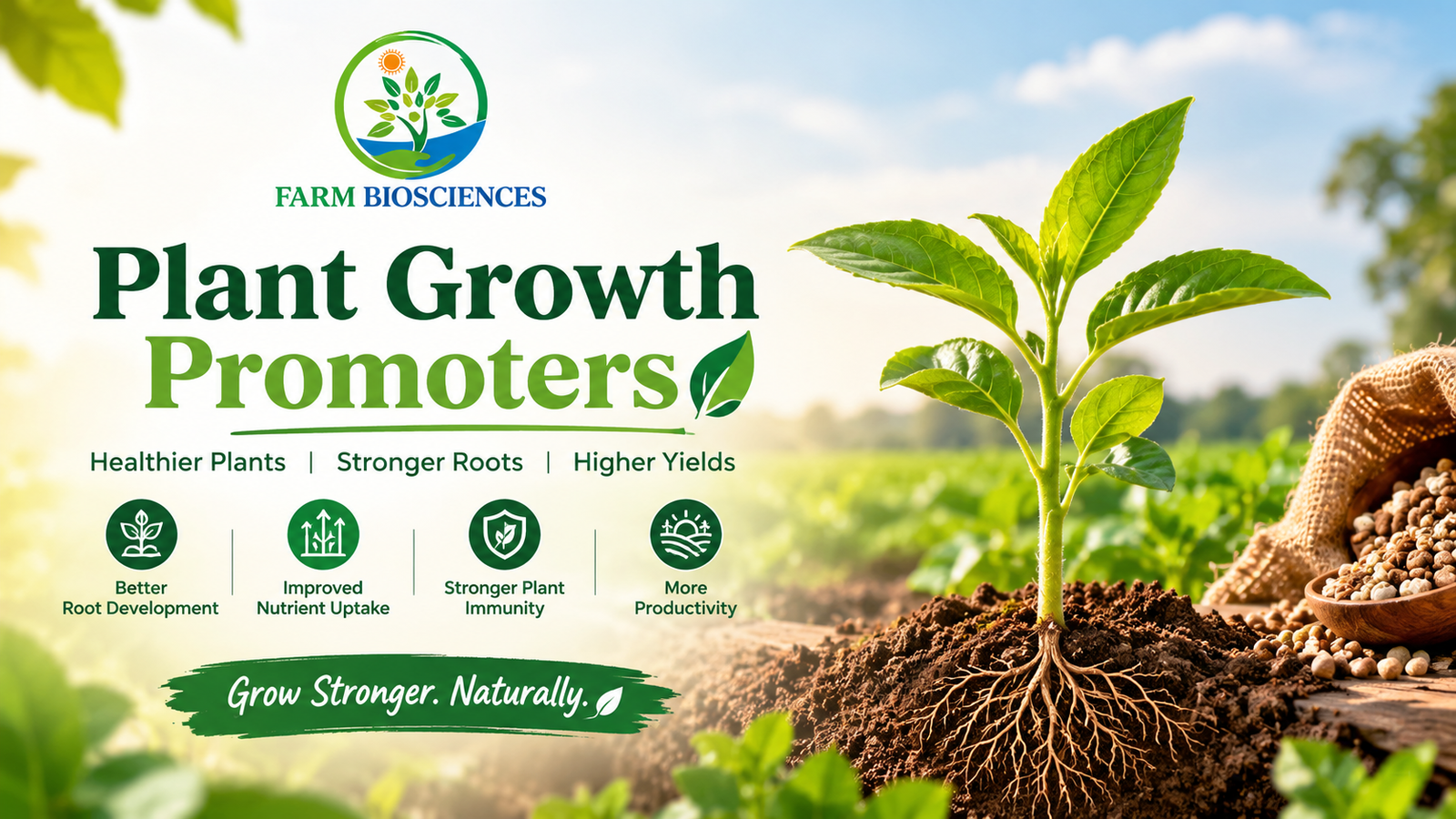
One of the most noticeable benefits of plant growth promoters is improved root growth. Strong roots mean better access to water and nutrients deep in the soil, which translates directly into healthier, more resilient plants above ground. Crops treated with plant growth promoters often show deeper, more branched root systems compared to untreated plants. This stronger foundation also helps plants stand up better to dry spells, since a well-developed root system can pull moisture from deeper soil layers when surface water is limited.
2. Faster and More Uniform Growth
Plant growth promoters help crops grow at a more consistent pace, reducing the gap between the strongest and weakest plants in a field. This uniformity makes planning, irrigation, and harvesting much easier, since plants reach key growth stages around the same time instead of spreading out over weeks. For commercial growers, this kind of consistency also simplifies labor scheduling and reduces the number of harvest cycles needed per field.
3. Improved Flowering and Fruit Setting
For fruit and vegetable crops, flowering and fruit set are critical stages. Plant growth promoters can help trigger stronger flowering and reduce flower drop, which directly improves the number of fruits that actually make it to harvest. This is especially useful during stressful weather conditions, when plants are more likely to shed flowers early.
4. Better Resistance to Environmental Stress
Heat waves, unexpected rain, or sudden temperature drops can all set crops back. Plant growth promoters help plants build a stronger internal defense system, making them better equipped to handle these stress events without major setbacks in growth or yield. This is particularly valuable for farmers working in regions where weather patterns have become less predictable year over year, since it reduces the risk of losing an entire season’s work to a single bad spell of weather.
5. Higher Overall Crop Yield
This is often the biggest reason farmers turn to plant growth promoters in the first place. By supporting root health, flowering, and stress resistance all at once, plant growth promoters create the right conditions for plants to reach their full yield potential, rather than being held back by preventable issues. Even modest yield improvements can add up to meaningful gains across a large field, making plant growth promoters a cost-effective addition to most crop management plans.
6. Reduced Dependency on Chemical Inputs
Many bio-based plant growth promoters work alongside the soil’s natural microbial activity instead of disrupting it. This means farmers can often reduce their reliance on heavy chemical fertilizers over time, since the plant is better able to use the nutrients already present in the soil. Over several seasons, this can lead to healthier, more balanced soil.
7. Better Long-Term Soil and Plant Health
Unlike quick-fix chemical treatments, well-formulated plant growth promoters support the plant and soil ecosystem over the long run. Healthier soil microbiomes, stronger root systems, and more resilient plants all add up to better results season after season, not just a one-time boost. Over time, fields managed with bio-based plant growth promoters tend to need less intervention, since the soil and crops are working in a healthier, more self-sustaining balance.
Why Bio-Based Plant Growth Promoters Make Sense
At Izumi Biosciences, our focus is on developing plant growth promoters that work naturally with crops instead of forcing rapid, artificial growth. Bio-based formulations support the plant’s own biological processes, which tend to produce more stable, lasting results compared to synthetic alternatives that can wear off quickly or stress the plant over time.
Farmers who use plant growth promoters as part of a broader crop management plan, alongside good watering practices, proper spacing, and healthy soil management, tend to see the best and most consistent results.
Who Benefits Most From Plant Growth Promoters?
Plant growth promoters aren’t limited to large commercial farms. Smallholder growers, greenhouse operators, and even orchard owners can see meaningful results from using them, since the core benefits, stronger roots, better flowering, and improved stress tolerance, apply across most crop types.
Vegetable and fruit growers often see the clearest results, since flowering and fruit set are so directly tied to final yield. Field crop farmers growing grains, pulses, or oilseeds also benefit, particularly through stronger root systems and better resistance to weather-related stress during critical growth windows. Even growers working with ornamental plants and nurseries use plant growth promoters to produce more uniform, market-ready stock.
Getting the Most Out of Plant Growth Promoters
To get real value from plant growth promoters, timing and application matter. Applying them during key growth stages, such as early root development, pre-flowering, and fruit setting, tends to produce better outcomes than random or inconsistent use. Pairing plant growth promoters with regular soil testing also helps farmers understand exactly where their crops need extra support.
Ready to give your crops a natural boost this season? Get in touch with Izumi Biosciences to find the right plant growth promoter for your fields, or visit izumibiosciences.in to see our full range of bio-based crop solutions.
FAQs
1. Are plant growth promoters safe for all crops?
Most bio-based plant growth promoters are formulated to be safe across a wide range of crops, though it’s always best to check product guidelines for specific plant types.
2. How often should plant growth promoters be applied?
This depends on the product and crop, but many are applied at key growth stages such as root development, flowering, and fruit setting rather than on a fixed daily schedule.
3. Do plant growth promoters replace fertilizers?
No. Plant growth promoters work alongside fertilizers by helping plants use nutrients more efficiently, rather than replacing the need for proper nutrition altogether.
4. Can plant growth promoters help during extreme weather?
Yes. Many plant growth promoters are designed to strengthen a plant’s natural stress response, helping it cope better with heat, cold, or unpredictable rainfall.
5. Are bio-based plant growth promoters better than chemical ones?
Bio-based options tend to support long-term soil and plant health, while chemical versions often provide a quicker but shorter-lived boost.