How to Protect Crops from Fungal Disease
Fungal diseases are among the most common problems faced by farmers. They can occur at various growth stages and reduce crop health, yield, and quality. When conditions are favorable and fungi are present in the field, diseases such as powdery mildew, downy mildew, rust, leaf spots, blight, damping-off, and root rot can spread rapidly.
Learning how to protect crops from fungal disease starts with prevention. Chemical fungicides should not be the only measure taken to reduce disease pressure; good soil management, proper irrigation, clean planting material, field sanitation, and timely biological or organic treatments can all help reduce disease.
A combination of sustainable crop protection methods can be more feasible for farmers seeking sustainable solutions. It integrates the use of biological products, preventive farm practices, and frequent crop monitoring.
Causes of fungal diseases in crops
Fungi grow when they have ample moisture, proper temperature, and plant material to colonize. Fungal diseases can develop under the following conditions: poor air circulation, over-irrigating, waterlogging of soils, and heavy crop canopy.
Fungal pathogens can be carried over in soil, crop residues, seed, weeds, irrigation water, and infected plants. Spores can then spread from plant to plant or field to field via wind, rain splash, insects, farm equipment, and humans.
The following are some of the common factors that increase the risk of fungal diseases:
- Too much water in the area around the leaves and roots.
- Poor drainage
- Overcrowded planting
- Excessive nitrogen application
- Infected seed or seedlings.
- Unremoved crop residues
- Successive cropping of the same crop.
- Poor field sanitation
- Lack of air circulation and sunlight
Knowing these factors makes it easier to protect crops from fungal disease before they become infected.
Common Fungal Diseases Farmers Should Watch For
Different crops are affected by different fungal pathogens, but several symptoms are commonly seen in agricultural fields.
Powdery Mildew
Powdery mildew typically appears as white to grey powdery spots covering leaves and young shoots. Plants can be weakened in severe infections, and photosynthesis can be affected.
Downy Mildew
Downy mildew sometimes causes yellow, light, or brown spots on the leaves. During wet conditions, the fungus can grow on the underside of leaves.
Rust
Rust diseases cause small spots that are reddish, orange, yellow, or brown in colour and often look like rust. They are usually found on leaves and may stunt plant growth.
Leaf Spot
Leaf spot diseases cause circular or irregular spots on the leaves. As the disease advances, infected leaves may become yellow and drop early.
Blight
Blight may lead to rapid browning or drying of leaves, stems, flowers, or fruits. Under certain weather conditions, some types of blight can spread rapidly.
Root Rot
Root rot is caused by pathogens that invade roots, especially in poor drainage or hydrosoils. Symptoms include wilting, yellowing, stunted growth, or overall weakness in plants.
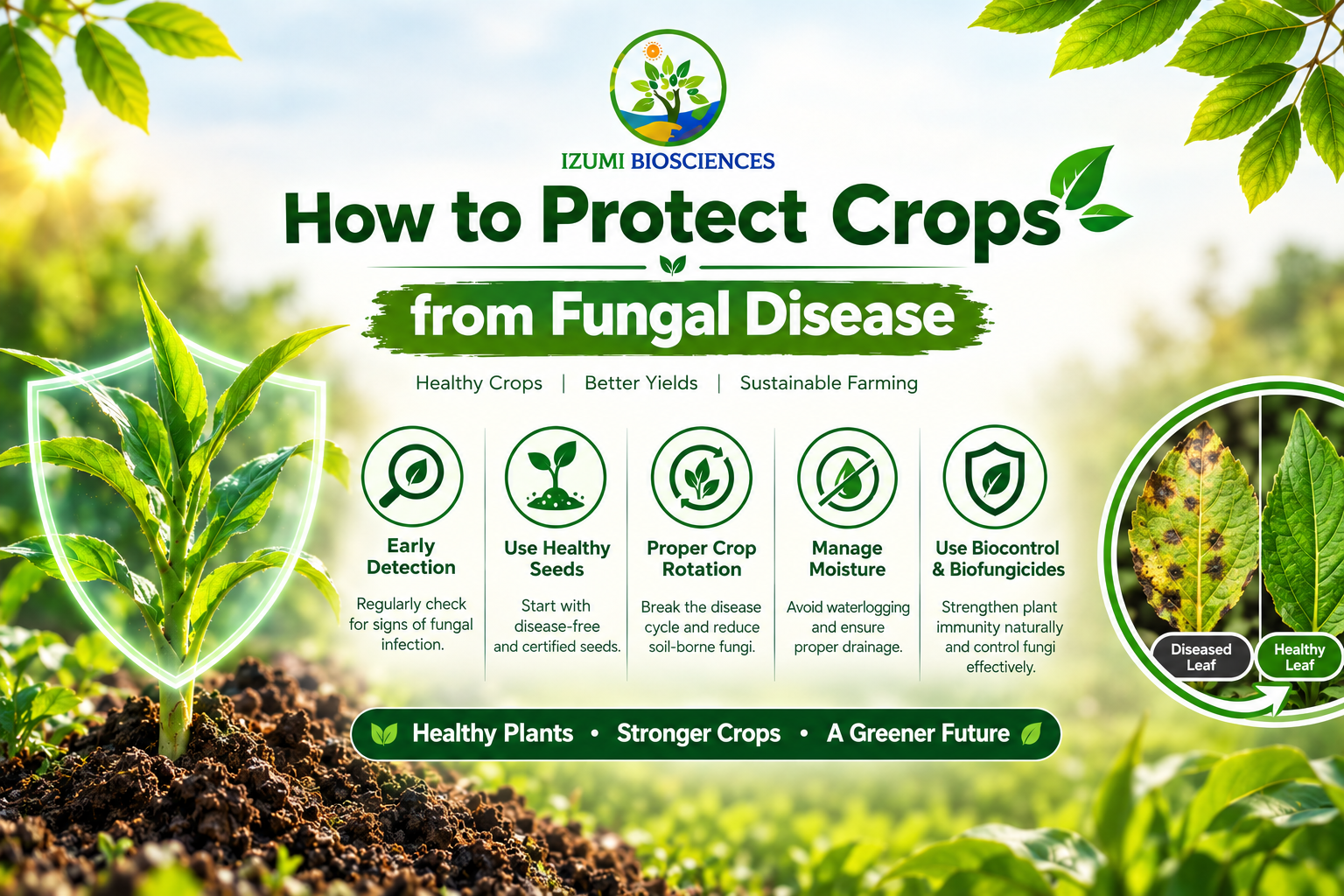
Early detection is crucial because once this disease is widespread, treatment is more challenging.
How to Protect Crops from Fungal Disease Naturally
Prevention should begin before visible symptoms appear. Farmers can reduce fungal disease pressure by improving field conditions and supporting healthy plant growth.
1. Start With Healthy Seeds and Planting Material
Diseased seeds, seedlings, or planting material can introduce pathogens into a field. Always select healthy and suitable planting material from reliable sources.
Seed treatment using appropriate biological or approved organic products can also form part of a preventive crop protection program.
2. Improve Soil Health
Healthy soil results in improved root development and therefore plant growth. Improvements in soil structure and biological activity can be achieved through the use of organic matter, compost, and beneficial microorganisms, as well as balanced nutrient management.
Do not apply fertilizers in excess, particularly nitrogen, as the resulting excessive growth may provide a more favourable environment for some diseases.
3. Maintain Proper Irrigation
High moisture is one of the biggest contributors to fungal disease development. Do not over-irrigate and allow excess water to run off.
When possible, irrigation practices that keep foliage dry will help reduce conditions that spread fungal pathogens.
4. Provide plants with adequate space
Dense planting will limit ventilation and cause leaves to stay wet longer. Follow recommended plant spacing for the particular crop.
Improved air circulation enables the foliage to dry quickly after irrigation, dew, or rain.
5. Use an herbicide to kill any infected plants
Fungal spores can be produced on diseased leaves, fruits, stems, and other parts of the plant. Discard infested material from the field and use crop residues effectively.
Avoid leaving severely infected plant material near healthy plants, particularly if the disease can persist in the plant residues.
6. Practice Crop Rotation
Re-entering the same field with the same crop can enhance the population of host-specific pathogens which develop with that crop.
Crop rotation disrupts the disease cycle and can reduce pathogens in the soil. Select rotation crops judiciously with respect to local farming practices and diseases in the field.
Organic Crop Fungal Disease Treatment
If fungal symptoms occur, farmers should try to identify the disease and understand it. Giving a product without understanding the problem can lead to wastage of resources and may not be an effective solution.
Biological fungicides, microbial formulations, and botanicals are all types of organic crop protection products that can be used to control organic crop diseases. Effectiveness varies by crop, pathogen, disease stage, weather, application method, and product formulation.
The beneficial microorganisms in biological crop protection products may suppress the harmful pathogens in various ways. Some beneficial microbes compete with disease-causing microbes; others can secrete compounds that inhibit the growth of pathogens or stimulate the plant’s defense mechanism.
Organic treatments are best conceived as components of a preventive or integrated crop management (ICM) program, not as a cure-all after high infestation.
The Role of Beneficial Microorganisms
Beneficial microorganisms are increasingly playing a significant role in sustainable farming. Some bacteria and fungi can promote plant growth and create an environment less conducive to harmful bacteria and fungi.
Some microbial products in agriculture work through mechanisms such as:
- Competition with harmful microorganisms
- Production of antimicrobial compounds
- Colonization of plant roots
- Improved nutrient availability
- Support for natural plant defense mechanisms
Farmers should select products according to the crop, target disease, application method, and manufacturer’s recommendations.
Avoid Overusing Chemical Fungicides
Chemical fungicides can be an important part of crop protection when used properly and wisely, but overuse and unnecessary use can lead to fungicide resistance and can impact beneficial organisms.
An integrated disease management approach can reduce the reliance on treatment modalities. Farmers can use these methods together: sanitation, rotation, irrigation control, resistant varieties (if available), biological products, and, if needed, targeted chemical applications.
When treating organic crop fungal disease, always ensure the product is approved for the crop and farming system and adhere to the label instructions on dosage, timing, compatibility, and application.
Create an Integrated Disease Management Plan
Protecting crops from fungal disease is best achieved by using several preventive measures, rather than relying on one.
Healthy planting material, soil health management, plant spacing, balanced nutrition, correct irrigation, crop rotation, field sanitation, regular monitoring, and biological crop protection are all part of a practical disease management plan.
It is recommended that farmers also keep notes of the incidence of diseases in previous years. Being able to identify diseases that occurred in certain fields at specific times and under specific meteorological conditions can help to better prepare for future prevention efforts.
Select Sustainable Crop Protection With Izumi Biosciences
Crop protection solutions are required to contribute to productivity while promoting sustainable agriculture. When used and adapted to the situation, biological and microbial technologies can be a significant component of integrated crop management.
Izumi Biosciences specializes in agricultural biological solutions that support the use of microbial and sustainable approaches in crop management practices. In combination with proper farming practices, these can contribute to a comprehensive approach to controlling fungal disease pressure.
When considering organic crop fungal disease treatment, apply a solution specifically to the crop, disease, growth stage, and field conditions, rather than a general treatment.
Developing a Robust Crop Protection Strategy
The incidence and severity of fungal diseases can be significant, but diseases can be prevented and managed effectively if they occur. Environmental management in the field is a great basis for disease management, including good field sanitation, healthy soil, proper irrigation, adequate spacing, crop rotation, and regular monitoring.
When used properly, biological products and organic crop fungal disease treatment can complement an integrated approach. The important thing to remember is to catch issues early and treat them appropriately based on the crop and disease.
Farmers can develop a more sustainable approach to protect crops from fungal disease by implementing good agricultural practices alongside appropriate biological crop protection products to keep crops healthy throughout the growing season.
Searching for an effective biological solution to healthier crops? Talk to Izumi Biosciences today and find the ideal crop protection solution for your crop.