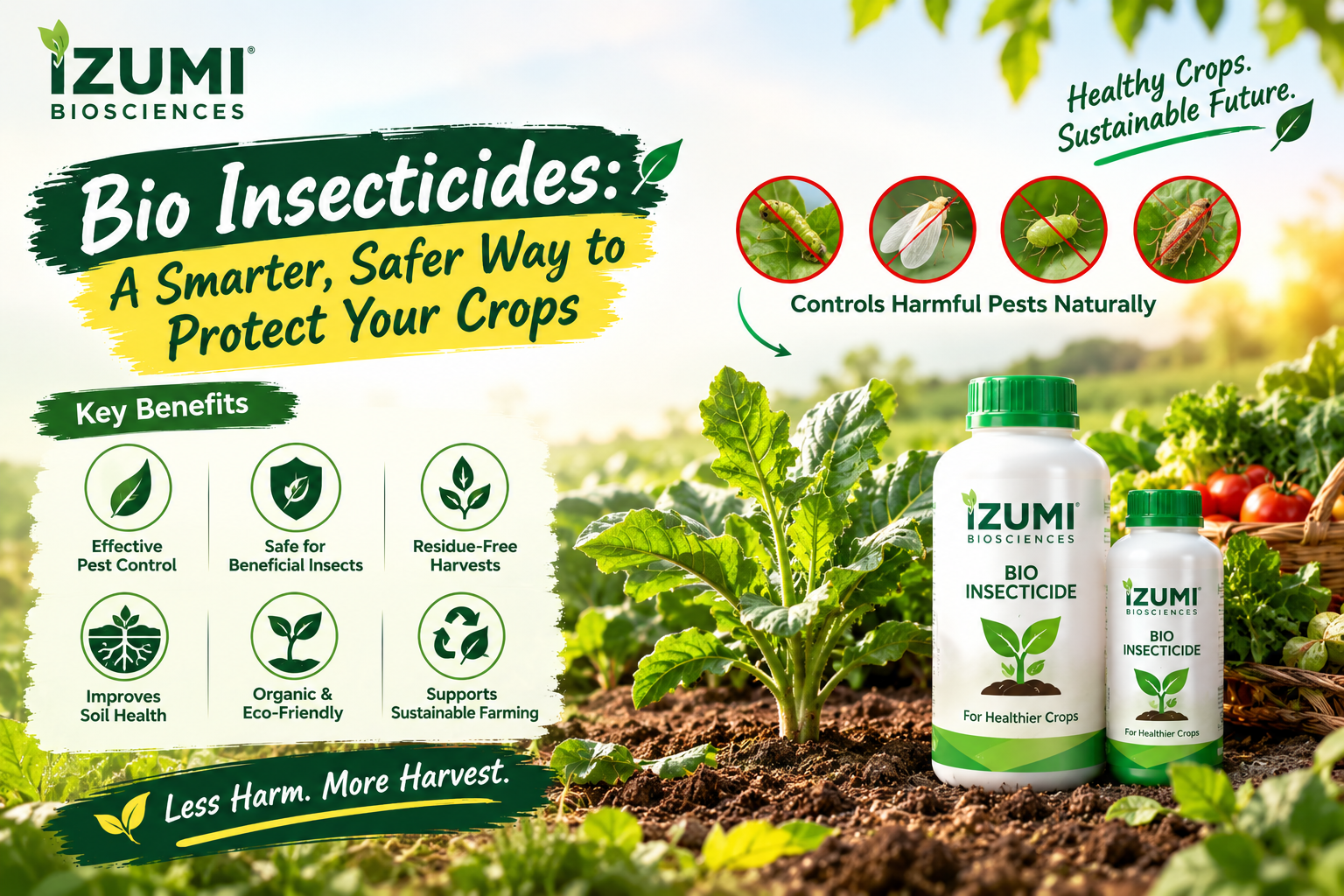
Bio Insecticides: A Smarter, Safer Way to Protect Your Crops
Pests are among the biggest threats to farm productivity. Every season, growers lose a large share of their harvest to caterpillars, aphids, whiteflies, thrips and borers. For decades, chemical sprays were the default answer, but heavy use has led to pest resistance, soil degradation, pollinator loss and residue problems in food. Bio insecticides offer a practical alternative. They control pests effectively while protecting the soil, the farmer and the environment. This guide explains what they are, how they work and how to use them well.
What Are Bio Insecticides?
Bio insecticides are pest control products made from living organisms or natural materials. These include bacteria, fungi, viruses, plant extracts and naturally occurring biochemicals. Unlike synthetic chemicals, they target specific pests, break down quickly in the environment and leave little to no harmful residue on crops.
Farmers worldwide are adopting them as part of sustainable agriculture. Consumers want cleaner food, and export markets increasingly enforce strict residue limits. Bio insecticides fit both trends, helping growers meet quality standards without giving up crop protection.
Main Types of Bio Insecticides
Bio insecticides fall into three broad categories.
1. Microbial insecticides
These contain microorganisms that infect or poison insects. Common examples include:
- Bacillus thuringiensis (Bt): produces proteins that disrupt the gut of caterpillars and other larvae.
- Beauveria bassiana: a fungus that infects insects through their outer surface and is effective against whiteflies, thrips, aphids and borers.
- Metarhizium anisopliae: a soil-dwelling fungus used against grubs, termites and various beetles.
- Verticillium lecanii: commonly used against sucking pests such as aphids and scale insects.
- Nuclear polyhedrosis viruses (NPV): highly specific viruses that control pests like Helicoverpa and Spodoptera.
2. Botanical insecticides
These come from plants. Neem-based products containing azadirachtin are the best known in India. They repel insects, disrupt feeding and interfere with growth and reproduction. Other plant extracts offer similar benefits.
3. Biochemical insecticides
These include naturally occurring substances such as insect pheromones, which disrupt mating or lure pests into traps. They are valuable for monitoring and for reducing pest populations without direct spraying.
How Bio Insecticides Work
The mode of action depends on the type of product. Microbial agents usually infect the insect, multiply inside it and weaken or kill it over several days. Bacterial toxins act on the digestive system once a pest eats treated foliage. Fungal spores attach to the insect’s body, germinate and grow through the cuticle. Botanical products often work as antifeedants or growth regulators, so pests stop feeding and fail to develop normally.
Because the mechanisms are specific, bio insecticides generally spare beneficial insects such as bees, ladybird beetles, lacewings and parasitic wasps. That selectivity helps keep natural pest control working in the field.
Key Benefits of Using Bio Insecticides
Safer for people and the environment. Most biological products have low toxicity to humans and animals. They do not contaminate groundwater or build up in the soil.
Low or no residue. Crops can often be harvested soon after application, which suits vegetables, fruits and export-oriented produce.
Reduced risk of resistance. Pests tend to develop resistance to chemicals with a single mode of action. Biological agents often act in several ways, which makes resistance slower to develop.
Protection of pollinators and natural enemies. Preserving beneficial insects supports long-term pest balance and better pollination.
Healthier soil. Many microbial products are compatible with soil biology and fit well into organic and natural farming systems.
Support for premium markets. Growers aiming for organic certification or export-grade produce find biological inputs essential.
Bio Insecticides vs. Chemical Insecticides
| Factor | Bio Insecticides | Chemical Insecticides |
| Target range | Specific pests | Broad spectrum |
| Residue | Minimal | Often significant |
| Effect on beneficial insects | Low | High |
| Resistance risk | Lower | Higher |
| Speed of action | Gradual (days) | Fast (hours) |
| Environmental impact | Biodegradable | Persistent in some cases |
Chemical products can knock down a heavy infestation quickly, which is why many growers still keep them for emergencies. Biological products work best when used early, as preventive or curative sprays at low to moderate pest pressure.
Crops and Pests Where Bio Insecticides Perform Well
Bio insecticides suit a wide range of crops, including vegetables, cotton, pulses, rice, sugarcane, fruit orchards, tea, spices and plantation crops. Typical targets include:
- Fruit and shoot borers in brinjal, okra and tomato
- Pod borers in chickpea and pigeon pea
- Bollworms in cotton
- Leaf folders and stem borers in rice
- Whiteflies, aphids, jassids and thrips in vegetables and horticultural crops
- White grubs and termites in soil
Matching the right product to the right pest is essential, which is why proper pest identification matters before any spray.
Best Practices for Applying Bio Insecticides
Biological products are living or natural materials, so they need a little more care than chemicals. Follow these practices to get consistent results:
- Scout regularly. Start applications when pest numbers are low. Biological agents work better early than during an outbreak.
- Spray at the right time. Early morning or late evening is ideal. Strong sunlight and high temperatures can reduce the activity of spores, bacteria and viruses.
- Ensure good coverage. Cover both sides of leaves, since many pests hide on the underside.
- Check water quality. Very alkaline water or chlorinated water can reduce the performance of some products.
- Avoid mixing carelessly. Do not combine microbial products with strong fungicides or bactericides unless compatibility is confirmed.
- Store properly. Keep products in a cool, dry place away from direct sunlight, and use them before the expiry date.
- Repeat as needed. Because biological products can degrade in the field, follow the label’s recommended spray interval.
Integrating Bio Insecticides into IPM
Integrated Pest Management (IPM) combines cultural, biological, mechanical and, when necessary, chemical methods to keep pests below damaging levels. Bio insecticides are a core part of this approach.
A practical IPM plan might include crop rotation, resistant varieties, pheromone traps, yellow sticky traps, field sanitation, release of natural enemies and timely biological sprays. Chemical products are then reserved for situations that truly need them, and applied selectively. Over a few seasons, this approach can reduce input costs, improve soil and crop health and lower the farm’s dependence on synthetic chemicals.
Why Bio Insecticides Matter for Indian Agriculture
India is among the world’s largest agricultural producers, and its farmers face rising input costs, climate-related pest shifts and growing scrutiny of pesticide residues. Government policy increasingly encourages biological inputs, natural farming and reduced chemical use. At the same time, buyers at home and abroad are asking for traceable, residue-conscious produce.
For smallholders and large commercial growers alike, adopting biological pest control is both an environmental choice and a sound business decision. Cleaner produce, better soil and stronger market access all add up over time.
Choosing a Reliable Bio Insecticides Supplier
Quality is the deciding factor in whether biological products deliver. Viability of spores, strength of active ingredients, formulation stability and shelf life all affect field performance. When selecting a supplier, look for:
- Scientifically developed, tested formulations
- Clear labeling with dosage, crop and pest recommendations
- Consistent batch quality and proper storage standards
- Technical guidance and after-sales support for farmers
Izumi Bioscience focuses on science-backed biological solutions designed to help growers protect crops sustainably.
Grow Greener with Izumi Bioscience
Healthy crops, clean produce, and resilient soil start with smarter pest management. Bio insecticides give farmers a dependable, planet-friendly way to protect yields without the drawbacks of heavy chemical use. Used early, applied correctly and combined with good IPM practices, they can transform how a farm handles pests.
Ready to switch to sustainable crop protection? Visit Izumi Bioscience today and connect with our team to find the right biological solution for your farm.
Frequently Asked Questions
Are bio insecticides as effective as chemical insecticides?
They can be very effective when used correctly, especially as preventive or early-stage treatments. They work more slowly than chemicals but offer longer-term benefits such as lower resistance and better soil health.
Are they safe for beneficial insects?
Most are highly selective and have minimal effect on pollinators and natural enemies, though it is always wise to follow label instructions.
Can they be used in organic farming?
Many biological products are accepted in organic systems, but always verify certification requirements with your certifying body.
How soon can I harvest after spraying?
Waiting periods are typically short, but check the product label for the exact interval.tive and have minimal effect on pollinators and natural enemies, though it is always wise to follow label instructions.
Can they be used in organic farming?
Many biological products are accepted in organic systems, but always verify certification requirements with your certifying body.
How soon can I harvest after spraying?
Waiting periods are typically short, but check the product label for the exact interval.